Issue July 2011 Flash Fiction Online July 2011

Table of Contents

Motivations and Choices

January 2015

Flash fiction requires, perhaps more than any other form of writing besides poetry, a deep understanding of human nature and motivations. In only a few dozen-to-thousand words, the reader has to immediately understand what the characters want, why they want it, and why they think they can get it with the choices they make. Each story in this month’s collection quickly taps deep reservoirs of human motivation.

The Perfect Mark,” by Melodie Campbell, is about greed. In my experience, raw greed is hard to come by: There’s always something else mixed in. In this delicious little crime story, however, greed is at its maximum level and completely focused — and the result is as dysfunctional as one could hope for.

A special congratulations are in order to Melodie, by the way: “The Perfect Mark” won third prize in the Bony Pete short story contest at the Bloody Words (Crime Writers of Canada) conference in Victoria, shortly before our date of publication.

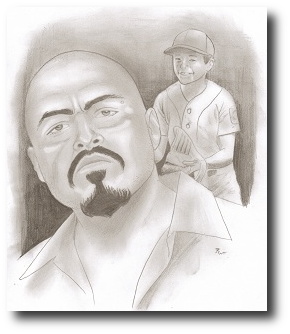
Kenyon Ledford’s “The Baseball Glove” is almost the opposite. There’s a surface of greed, of fear, of primal and animalistic emotion; but the real story is in the deeper feelings and motivations of its characters. This mainstream piece is pregnant with ideas about the lives that came before and after this scene.

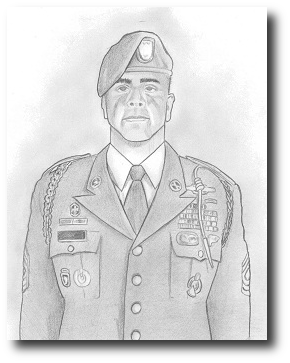
Our third new story, “A Purple Heart,” strikes a chord that’s difficult to describe. I could lightly relate it to clichés like “watch what you wish for,” but it runs deeper than that. Using a science-fiction premise, Craig DeLancey gives us a vivid sense that sometimes, the only thing worse than a terrible longing is its terrible fulfillment.

Normally, when organizing stories for an issue, I place a more serious story between two lighter-hearted ones, like a triptych or a sonata. In this case, the more natural fit seemed to be going from less serious to more. (These are descriptions of mood, by the way, not judgments of power or depth.)

Our Classic Flashes this month lighten the tone somewhat. I went back to the Life Shortest Stories Contest, the winners of which were published in 1916. As luck would have it, we have a little extra space this month, so I’m including both third-prize winners this month: “Business and Ethics” by Canadian author and editor Redfield Ingalls, and “Her Memory” by Dwight M. Wiley. They’re quite different stories, but they both speak to the longing inherent in the human condition, whether in its disordered and greedy forms or its proper — though sometimes thwarted — operation.

Bruce Holland Rogers is unfortunately unable to contribute this issue, but he’s hoping to be back next month.

A special thanks to R.W. Ware for his illustrations this month.

Please enjoy the stories, and remember, comments are like gold to authors. Then again, gold is like gold, too, and tipping is appreciated.
Leave a Reply

The Perfect Mark

The old lady was almost the perfect mark.

Sasha held back an urge to smirk, and instead leaned forward to listen with polite interest.

“Do you like cats, Miss… how do you pronounce that?”

Sasha nearly grimaced, but caught herself. “Oh yes,” she said quickly, glancing around the condominium. Nothing in sight but good solid furniture. “Do you have one?”

“Not yet,” twittered the old lady. “That’s why I need a personal support worker. To help me look after it.”

Sasha smiled back. She was confident about getting this job — she’d never missed before. Plain hair, no makeup and conservative clothes… it was easy to fool them. And she charged way less than agencies, as long as they paid upfront in cash. It was good to deal in cash.

As the old lady chattered on about cats, Sasha’s eyes strayed around the room. Expensive furniture, lots of figurines, silver candelabra on the sideboard, probably sterling silver within it. No doubt good jewelry in the master bedroom, and lots of cash. Old birds like her tended to distrust bank cards. Sasha relished the anticipation. It wouldn’t take her long to find out where the valuables were kept.

“More tea, dear?”

Sasha accepted more tea with a smile. The hands that held the teapot were dotted with brown age spots and the veins stood up in protruding ridges. Sasha had to move the cup deftly as tea came pouring out at an alarming angle.

“Oh dear!” Chirped the old lady.

“Is something wrong, Mrs. Mortify?”

“Oh no,” She looked embarrassed. “I just need — if you’ll excuse me…” She teetered off the couch and shuffled off to the master bedroom.

Bathroom, Sasha mused dreamily. She sipped her tea, enjoying it, and smiled with pleasure at her good fortune. Chances are the old bird wouldn’t bother to check references — they never did. Old people were so naïve.

Sasha leaned back on the loveseat and closed her eyes. It was going to be almost too easy.

Twenty minutes later, Elvira Mortify came out of the bedroom wearing her coat, and shuffled over to the prostrate body of Sasha Sachanska. A twisted smile creased her face.

With surprising deftness, she whisked the gold necklaces off the girl — three of them — as well as the thick gold hoop earrings, gold bracelets and engagement ring. They fit snugly into the inside zippered pocket of her tweed coat.

Scrawny fingers reached for the purse, heading straight for the wallet.

Eight hundred dollars! That should keep us going for quite a while, she mused. Vet bills were so expensive these days.

The old lady retrieved a satchel from behind the couch, opened it, and took out a tall blue thermos. With great care, she emptied the contents of both teacups, teapot, and creamer into the cavity. Each piece of the tea service fit neatly into prepared pockets. She zipped up the satchel and stood up.

The old lady took a last look around the room. Condominiums were really so convenient. Owners were always going away for weekends.

The girl was still out cold. Chances are, she wouldn’t call the police — they never did. Too much pride… so foolish.

And even if she did: one old woman looks pretty much like another. Young people can’t see past the white hair and wrinkles.

Elvira looked down at her victim and shook her head. Young people were so naïve.

As she turned for the door, Sasha lunged for her ankles.


Comments

  1. Saint says:
    This was entertaining!

Leave a Reply

The Baseball Glove

by Kenyon Ledford

January 2015

I looked at him closer. “Jorge?” Artwork © 2011, R.W. Ware
Copyright 2011, R.W. Ware

They rolled in at one thirty-five in the morning and headed straight for the beer in the back. I checked the clock. My shift at the Quick-N-Go was ending at three A.M. But when cutoff time for selling booze is two o’clock, a little attention to detail is needed. I stashed the sports page and watched the three gang-bangers linger in the back.

I gritted my teeth as they approached the register; three Latinos, late teens, early twenties, shaved heads, tattoos, clean white T-shirts and baggy pants. Full of gangster machismo they approached the counter, loudly, and set down forty-ounce bottles of malt liquor. They’d already begun horsing around, loudly and profanely.

“No, puto. I paid last time, eh?”

“Don’t be like that, dog. You sound like my heina.

“Shut up, fool. I’ll kick your ass.”

Let me guess, I thought. They’re not going to have ID, or enough money, or they’re going to try and intimidate me into giving them something free.

They were still jawing at each other. “Just hurry up, fool. This gentleman doesn’t got all day.” The gentleman was me, and it wasn’t said in a respectful way.

They bunched in at the counter. On the left a short, bull-like boy with a ring in his eyebrows was smiling menacingly at me. On the right, a medium sized kid, very skinny. He was watching the street, keeping his face away from me. The local area code was tattooed in large numerals on the back of his head.

In the middle, I assumed, was the leader. He hadn’t joined in the general smack-talking, and the other two left him alone. He was the tallest of the three. His face looked like a storm was brewing. “What’s up, Ricky?”

My name tag said Rick. Here we go, I thought. “Not much. Can I see your ID?”

He handed me his license. “You don’t remember me, Ricky?”

My scalp prickled. That was the last thing I wanted to hear. My mind raced to recall any incidents I may have had with his kind in the past. I looked at the ID, the photo, probably taken a few years ago. When I looked up at him he smiled. It was like the sun coming out.

I looked at him closer. “Jorge?”

His smile grew. “You remember, Ricky? You gave me my first baseball glove.”

I looked for a moment at his face. He had a nasty scar in his right eyebrow and a gold ring through the other. His nose had been spread across his face and he had three teardrops tattooed under his left eye. His right forearm bore a memorandum for somebody, and the back of his hand had the three dots that meant my crazy life. But in his eyes I could now see the pudgy ten year old that a dishwasher had brought to the company picnic for a restaurant I used to work at.

He had been a delightful kid who preferred to be around the adults. He was on the opposing team during the softball game and didn’t have a glove. Each time my team came up to bat I tossed him my glove as he ran to the outfield, and vice versa. When the picnic had broken up he tried to return the glove to me but I’d told him to keep it.

“Jorge!” I exclaimed and stuck out my hand. He put out his fist, so I bumped it with mine. “How are you?”

He put his hands in his pockets and looked down. “Oh, you know, Ricky, same stuff, different day.”

“So where are you working?”

“I can’t work right now. I have a trial coming up and all.”

I raised my eyebrows “For…?”

He made a clicking sound of disgust with his tongue. “You know that shooting in Oakdale a couple years ago?”

I slowly nodded.

“They’re trying to say it was me, but that’s bull…crap, I was at home — it was some other fools but I’m the only one they can go after, ’cause — ”

The one who had been looking out the window interrupted. “George, we gotta bounce, eh?”

“All right, hey, I gotta go, Ricky.” We bumped fists again. “If you don’t see me again it’s because I’ll be in…” he smiled, “you know.” When they were at the door he paused. “I’ve never forgotten you for giving me that glove, Ricky.” Then the night seemed to suck them outside into the darkness where they belonged.

In a daze I absently began wiping the counter while I recalled the boy at the picnic. I said a prayer for him; he was beyond baseball gloves, now.

Comments

  1. David Galef says:
    Looking for an example of  flash fiction in the genre of a Western, to include in a textbook.​David Galef
    Professor of English
    Creative Writing Program Director
    English Department
    Montclair State University
    1 Normal Avenue
    Montclair, NJ 07043-1624
    e-mail 
    website http://davidgalef.com/

Leave a Reply

A Purple Heart

by Craig DeLancey

January 2015

Artwork © 2011, R.W. Ware

“Patrick McMahon died two months ago, defending his country,” Father Cunningham intones. Most of us in the church look over at Patrick, where he sways in the first pew, to see if he reacts. He doesn’t.

Patrick has not spoken a word since the two army nurses led him, with a tight grip on each bicep, through our front door and into our living room. “Oh, honey, welcome home,” my mother exclaimed. She didn’t touch him. The nurses let go and Patrick tottered on the dingy carpet. They explained that he’d only been dead a short while, so his brain damage wasn’t as bad as most. They told us he couldn’t eat more than a handful of living people’s food each day, and they gave us a drum of blue pellets that he should eat instead. They told us to bathe him and walk him. And then they left. Mom fled to the kitchen.

“Hey,” I said then. His skin had a gray sheen. I touched him. He was cold. “It’s me. Your little bro.”

His eyes flickered. His hand twitched. The skin under his nails was dark purple, almost dead black. “Uh,” he grunted.

Now Father Cunningham frowns at Patrick. “My friends, we all here loved Patrick. Let us remember him alive and vibrant. Let us celebrate his life.”

We tried to celebrate. We had a party. People brought casseroles. Patrick stood, swaying, and looked no one in the eye. Mom forced a smile through the whole thing but when Patrick had his piece of cake he couldn’t chew with his mouth closed and gooey bits of frosting mushed off his purple tongue and fell out over his gray lips. It made Mom flee again to the kitchen to weep. I took a party napkin and wiped his cold face. He didn’t even blink.

“God asks us to bear our burden,” Cunningham continues, “and to take comfort in knowing that He awaits us after death. We must not forget this.”

Father Cunningham argued against signing the forms. My mother had been against it too, I think. But after Patrick got his orders, she sat with him at the kitchen table and read the paperwork from the thick folders. Then she handed Patrick a pen to sign the in-case-of-death authorizations: the green sheet for a plastic heart transplant, and the blue for the purple serum that would replace his coagulated dead blood. She understood that, before he went to war, Patrick needed to believe that if he were killed, it wouldn’t be permanent.

Father Cunningham smiles sadly at my mother. “What can we say of this son of ours?”

That he had not been a good son. That he had failed at school, never excelled at sports, disobeyed all the best advice, gotten at least one girl pregnant who later had an abortion, and joined the army not for college money but because violent computer games infested him with a desire to become a sniper. Yet my mother had been so proud to see him in uniform, burstingly erect. He seemed another man. Transformed with purpose — even if a purpose not his own.

The Priest nods, and answers his own question. “We can say he was one of us. A child of God. Today we remember him, but let us also remember Christ’s sacrifice for us so that we may have a true eternal life.”

I think the smell finally pushed my mother beyond endurance. When the dank hint of putrefaction overwhelmed the kitchen and then our bedrooms, she called Father Cunningham and told him he was right: this abomination was not Patrick. This Patrick sat on the couch all day, motionless but for, perhaps once an hour, slowly lifting a blue pellet to his mouth from the bowl mom had set on the table. His eyes were turning black. Only the changing of a TV station could make him blink.

“Amen,” Father Cunningham finishes. Music starts. I lead Patrick to the hearse.

At the graveyard, we set the empty coffin in the mud beside the pit and lift the lid. Rain spots the white silk interior. My brother doesn’t even grunt. We wait a moment, unsure who should try to lead him. But then, unbidden, Patrick shuffles through mire to the coffin and climbs inside.

His eyes stare wide at the padded cover as it drops over him. Then we slide the coffin onto the bed of straps. The winch lowers him into the muddy hole.

I vow that if he hits the door once, if he just taps on it, I’ll leap into the grave and bust him out. Though he could lift the lid himself, if he wanted. But the coffin is silent and still.

The water makes the dirt heavy. It falls into the grave as if thrown. There is no sound but the rain on umbrellas, and the chunk of the shovels, and my mother grieving her son’s final end.

When we get home I pour the last of his blue pellets into the trash out behind the garage. Then I lay on my bed and wait for the neighbors to arrive with a second batch of casseroles.

Patrick won’t last long. A week, maybe. His purple heart, pushing each day more sluggishly at his congealing blood, starved of oxygen and the warmth of living cells, will eventually stop. That is some comfort to Mom. To know that all the pains and the mess of this uncertain end will be forgotten, and what will remain is what a passerby might take from a veteran’s grave stone: here lies a hero.

History will set everything aright, with a story of how many good men fought evil and then died. The kind of story that could only be told after the dead were bound under the heavy Earth that keeps them silent and unseen.

Leave a Reply

Business and Ethics

In the dingy office of A. Slivowitz & Co., manufacturers of dyes, things were humming. Every clerk was bent over his desk, hard and cheerfully at work, and there was a general air of bustle and efficiency.

That was because A. Slivowitz stood in the doorway of his private office looking on.

The portly head of the firm watched the scene complacently for a few minutes. Then, catching the eye of his young but efficient private secretary, he beckoned him with an air of mystery to the inner sanctum.

The secretary, who was sharp of eye and alert of manner, rose at once and followed, though it was not the custom of A. Slivowitz to summon him thus. His employer sank ponderously into his swivel chair and motioned to the secretary to shut the door and take a seat. Then for a minute or so he was silent, playing with his massive gold watch chain and studying the young man through puckered lids. But if the secretary was perturbed he did not show it.

“Mr. Sloane,” began Slivowitz, at length, in his heavy voice, “you been with the firm now how long — six or five months, ain’t it?”

“Nearly six,” the dapper young man confirmed briskly.

“You’re a smart feller, Mr. Sloane,” his employer continued, examining the huge diamond on his left hand. “Already you picked it up a lot about dyeing. A fine dyer you should make. Now, Mr. Sloane, I’m going to fire you.”

The secretary’s eyebrows went up a trifle, but otherwise he showed no great perturbation. Perhaps a certain elephantine playfulness in the big man’s tone reassured him.

“By me business is good,” Slivowitz went on, with a fat chuckle. “I’m a business man, Mr. Sloane, first and last, and nobody don’t never put nothing over by me.”

Knowing something of his employer’s business methods, Sloane could have amplified. What he said was: “Thanks to your royal purple, Mr. Slivowitz. You’ve about cornered the trade.”

“They can’t none of ’em touch it, that purple; posi-tive-ly,” agreed the dyer, with much satisfaction. “But” — and he became confidential — “between me and you strictly, this here now Domestic Dye Works, they got it a mauve what gives me a pain.”

He hitched his chair closer and laid a pudgy hand on Sloane’s knee. “I’m going to fire you,” he repeated, with a wink. “I want you should go by Domestic Dye Works and get it a job. Find out about the formula for their mauve — you understand me — and come back with it, and you get back your job and a hundred or seventy-five dollars.”

Sloane started. For a moment he stared at his employer, his face going red and pale again; then he rose to his feet.

“Sorry, Mr. Slivowitz, but I can’t consider it,” he said.

“Oh, come now, Mr. Sloane!” protested the dyer, with a laugh, leaning back in his chair. He produced a thick cigar and bit off the end. “These here scruples does you credit, Mr. Sloane, but business is business; and, take it from me, Mr. Sloane, you can’t mix business up with ethics. Them things is all right, but you gotta skin the other guy before he skins you first, ain’t it?”

“That may be — ” began the secretary, as he moved toward the door.

May be? Ain’t I just told you it is?” Slivowitz paused in the act of striking a match to glare. “You needn’t to be scared they’ll find it out where you come from and fire you, neither, Mr. Sloane,” he added, more quietly and with a cunning expression. “I got brains, I have. A little thing like recommends to a smart man like me — ” The match broke. He flung it into the cuspidor and selected another.

Sloane paused with his hand on the doorknob. “Mr. Slivowitz — ” he began again.

“Of course,” continued his employer, “I could make it — well, a hundred fifteen, Mr. Sloane. But, believe me, not a cent more, posi-tive-ly.”

The secretary shook his head decidedly.

“What?” roared Slivowitz. “Y’mean to tell me you ain’t going to do it? All right; you’re fired anyhow, you understand me.” Then with an evil glitter in his eyes, “And if you don’t bring by me that formula, you get fired from the Domestic Dye Works; and you don’t get it no job nowheres else, too! Now, you take your choice.” This time the match lighted successfully.

Sloane smiled. “Quite impossible,” he said. “I was going to resign in a day or two, anyway.”

“Eh?” exclaimed the head of the firm, his jaw dropping and his florid face paling a little. In the face of a number of possibilities he forgot the match in his fingers.

“Yes. You see — you’ll know it sooner or later — the Domestic Dye Works sent me here to learn the formula for your royal purple.”

And the door slammed shut behind A. Slivowitz’s private secretary.

Leave a Reply

Join the 
Community

Support

Support lorem ipsum dolor sit amet consectetur. At dignissim neque amet proin sodales vulputate dolor elit ipsum dolor sit amet.

Subscribe

Subscribe lorem ipsum dolor sit amet consectetur. At dignissim neque amet proin sodales vulputate dolor elit.

Submit a Story

Submissions lorem ipsum dolor sit amet consectetur. At dignissim neque amet proin sodales vulputate dolor elit. At dignissim neque amet proin sodales vulputate dolor elit.