Issue December 2010 Flash Fiction Online December 2010

Table of Contents

Firing Squad

by Gary Cuba

February 2015

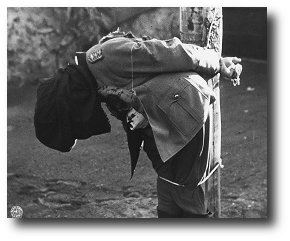
Artwork : Photograph of German General Anton Dostler after his execution by firing squad on 1 December 1945. This photo is in the public domain and comes to us via Wikimedia Commons.

Lord knows I didn’t want to shoot Mendez. Hell, he was only a green kid, a frontline infantry replacement just up from boot camp. He acted gung-ho, but he’d never been exposed to live action before.

I knew the stark terror he must have felt a few days ago when the enemy tanks rolled over the ridge in front of us. It wasn’t a mystery to anyone; we’d all been there before. Were there again at that moment, in fact.

Yet, by the grace of either God or Satan — who can really say which? — none of us had ever succumbed to our finer human instincts. Which is to say that none of us had ever bolted. I don’t know why. We’d all wanted to, often enough.

Mendez had run, and that had been his crime: cowardice in the line of fire. And that is why he now stood before a field firing squad at our rear command post, wrists bound behind him, shaking and sweating in front of me and five other soldiers from our platoon. I could hear him praying to God, could see tears flowing down his cheeks.

I wanted to comfort him, not kill him. He was just a kid! If only he had held it together for another few minutes, when we finally got our air support and pushed back the enemy incursion.

Lieutenant Jamison, our platoon commander, was in charge of the proceedings. I can’t remember his exact words, but he tried his best to buck us up for what we had to do. A nasty business, he said — but necessary to maintain military discipline, set a proper example, one bad apple, et cetera, et cetera. He didn’t have his heart in it. But I knew he had to follow orders, just as we all did.

He gave a “present arms” command, walked down the firing line and inserted a single round into each of our carbines. I knew one of them, by protocol, was a blank cartridge — so that each of us might convince himself that he hadn’t been the one who had taken the condemned man’s life.

Jamison then moved to Mendez and placed a hood over his head. I heard Mendez’s muffled wail, heard him apologize to all of us and swear to do better, heard him pleading for another chance. But it was too late for that. My heart sank another increment. It could not go any lower.

“Ready.”

I hoped against hope that someone would miraculously intervene. A last-second reprieve from the battalion CO, an angel swooping down from on high — something, anything. I chambered my round.

“Aim.”

Blast it all. Where is God when you need him most?

I drew a bead on the center of Mendez’s chest. Then I thought: Sure, one of us has a blank in his rifle. But odds are that mine is live. There’s no way I can chance shooting this man for what he’s done. Anyone could suffer a moment of weakness under extreme stress. I re-aimed slightly over the top of Mendez’s head.

I didn’t worry about Mendez being executed per the order. The others in the firing squad would get the job done. Certainly Corporal Groznek would. He stood at the far end of our line, the only one who had volunteered for this duty; the rest of us had drawn short straws. He’d hated Mendez ever since the kid got here. I don’t know why — other than that Groznek seemed to have it in for every living thing.

Groznek relished killing. And that went beyond killing enemy combatants. Some of the men whispered stories about him raping and murdering civilians. One said he was with Groznek when they stormed a house, a suspected enemy command post that turned out to be just an innocent residence. He heard Groznek curse in frustration, then watched him smash open a woman’s skull with the butt of his rifle and skewer her baby with his bayonet.

I don’t know if that story was true — I didn’t really want to know — but I’d seen some things with my own eyes, and it would’ve fit Grosnek’s style.

Lt. Jamison probably didn’t want to know, either. The fact is, that same bayonet had saved our hides in a couple of tight spots. It’s hard to remove one of your best killers when you’re ass-deep in alligators. I understood why the Lieutenant hadn’t lowered the hammer on him. I understood it, but that still didn’t make it totally right.

“Fire!”

I let my round fly. Mendez fell to his knees, leaned his head back and called out to God.

There wasn’t a scratch on him.

I laughed out loud; I couldn’t help it. Everyone did the same thing I did? And Groznek drew the blank? I heard him sputtering and growling at the far end of the line.

“You chicken-shit bastards,” he said. “You’re all just as cowardly as Mendez!”

He tossed his carbine aside, pulled out his personal .45 sidearm and strode toward Mendez. Sidearms weren’t sanctioned weapons for an enlisted man to carry, but Lt. Jamison had been lenient about the practice. Many of us carried them and owed our lives to his forbearance.

“Stand down, Corporal Groznek,” Jamison said. “I haven’t given the coup de grâce order yet.”

“Bastards! Cowards! This is the way you kill a man. Eyeball to eyeball.”

Groznek yanked off Mendez’s hood and pressed the business end of his pistol between the kid’s wide eyes.

The crack of a .45 caliber shot rang out. I can still hear it reverberating inside my head, even as I write this.

Tomorrow morning, I too will stand in front of six of my fellow soldiers while military field justice is served — in my case, for the murder of Stanislaw Groznek, Corporal, U.S. Army.

Some would say I should be spending this time finding peace with God. But quite honestly, I think I already have.
Leave a Reply

The First Puritan Christmas Tree

by Anonymous

February 2015

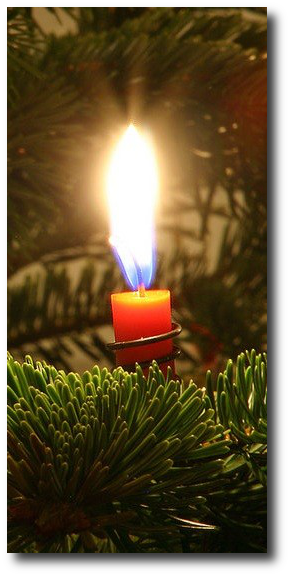
Yes, I see! I see! O mother, it is so beautiful! Were all the trees on all the hills lighted up that way when Christ was born? Artwork : This photo by comes to us via and is used under the .A little context: The Puritans disparaged Christmas as “Foolstide” and thoroughly discouraged its celebration. The Plymouth Pilgrims even spent their first Christmas Day in the New World putting up a building, thereby showing their complete contempt for the holiday. You can find more information about this at Wikipedia.

This story is set during that time in America. Nothing is known about its author. It was published in 1895 in a collection of stories called A Budget of Christmas Tales.

Mrs. Olcott called her boys, and bade them go to the pine woods and get the finest, handsomest young hemlock tree that they could find.

“Get one that is straight and tall, with well-boughed branches on it, and put it where you can draw it under the wood-shed after dark,” she added.

The boys went to Pine Hill, and there they picked out the finest young tree on all the hill, and said, “We will take this one.” So, with their hatchets they hewed it down and brought it safely home the next night when all was dark. And when Roger was quietly sleeping in the adjoining room, they dragged the tree into the kitchen. It was too tall, so they took it out again and cut it off two or three feet at the base. Then they propped it up, and the curtains being down over the windows, and blankets being fastened over the curtains to prevent any one looking in, and the door being doubly barred to prevent any one coming in, they all went to bed.

Very early the next morning, while the stars shone on the snow-covered hills — the same stars that shone sixteen hundred years before on the hills when Christ was born in Bethlehem — the little Puritan mother in New England arose very softly. She went out and lit the kitchen fire anew from the ash-covered embers. She fastened upon the twigs of the tree the gifts she had bought in Boston for her boys and girl. Then she took as many as twenty pieces of candle and fixed them upon the branches. After that she softly called Rupert, Robert and Lucy, and told them to get up and come into the kitchen.

Hurrying back, she began, with a bit of a burning stick, to light the candles. Just as the last one was set aflame, in trooped the three children.

Before they had time to say a word, they were silenced by their mother’s warning.

“I wish to fetch Roger in and wake him up before it,” she said. “Keep still until I come back!”

The little lad, fast asleep, was lifted in a blanket and gently carried by his mother into the beautiful presence.

“See! Roger, my boy, see!” she said, arousing him. “It is Christmas morning now! In England they only have Christmas-boughs, but here in New England we have a whole Christmas-tree.”

“O mother!” he cried. “O Lucy! Is it really, really true, and no dream at all? Yes, I see! I see! O mother, it is so beautiful! Were all the trees on all the hills lighted up that way when Christ was born? And, mother,” he added, clapping his little hands with joy at the thought, “why, yes, the stars did sing when Christ was born! They must be glad, then, and keep Christmas, too, in heaven. I know they must, and there will be good times there.”

“Yes,” said his mother; “there will be good times there, Roger.”

“Then,” said the boy, “I sha’n’t mind going, now that I’ve seen the Christmas-bough. I — What is that, mother?”

What was it that they heard? The little Olcott home had never before seemed to tremble so. There were taps at the window, there were knocks at the door — and it was as yet scarcely the break of day! There were voices also, shouting something to somebody.

“Shall I put out the candles, mother?” whispered Robert.

“What will they do to us for having the tree? I wish we hadn’t it,” regretted Rupert; while Lucy clung to her mother’s gown and shrieked with all her strength, “It’s Indians!”

Pale and white and still, ready to meet her fate, stood Mrs. Olcott, until, out of the knocking and the tapping at her door, her heart caught a sound. It was a voice calling, “Rachel! Rachel! Rachel!”

“Unbar the door!” she cried back to her boys; “it’s your father calling!” Down came the blankets; up went the curtain; open flew the door, and in walked Captain Olcott, followed by every man and woman in Plymouth who had heard at break of day the glorious news that the expected ship had arrived at Boston, and with it the long lost Captain Olcott. For an instant nothing was thought of except the joyous welcoming of the Captain in his new home.

“What’s this? What is it? What does this mean?” was asked again and again, when the first excitement was passed, as the tall young pine stood aloft, its candles ablaze, its gifts still hanging.

“It’s welcome home to father!” said Lucy, her only thought to screen her mother.

“No, child, no!” sternly spoke Mrs. Olcott. “Tell the truth!”

“It’s — a — Christmas-tree!” faltered poor Lucy.

One and another and another, Pilgrims and Puritans all, drew near with faces stern and forbidding, and gazed and gazed, until one and another and yet another softened slowly into a smile as little Roger’s piping voice sung out:

“She made it for me, mother did. But you may have it now, and all the pretty things that are on it, too, because you’ve brought my father back again; if mother will let you,” he added.

Neither Pilgrim nor Puritan frowned at the gift. One man, the sternest there, broke off a little twig and said:

“I’ll take it for the sake of the good old times at home.”


Leave a Reply

Isabel

by Michael Plemmons

February 2015

A summer night, a porch swing, Grandma Clara gently rocking.

A girl comes out from the house. She stares in the dark. “Mom wants you back inside,” she says. “Now.”

“No, baby, not yet. Come sit with me.”

Clara makes room for her on the swing. The girl stares.

“Just one minute, Izzy. I promise.”

Isabel is careful to sit an arm’s length apart (Clara’s arm’s length). Clara rocks the swing. The girl’s legs dangle. Inside the house people laugh at something — the girl listens. Clara feels her minute ticking.

A firefly ignites in front of them. Isabel takes a swing, misses. Two more go blinking by, out of range. She glares at them.

“I want one. Get one for me.”

“No, that’s bad luck, baby. Let ’em go.”

Isabel looks at Clara — the same way her mother looks at Clara. (Don’t start your crap, just get her a damn bug.)

Clara says: “Do you understand why they’re flashing?”

“Becuuuz they’re lightning bugs.” (You old fool.)

The girl stares forward. Clara studies her profile: the thin locked lips, the upturned knifepoint nose, those gray unblinking eyes. She imagines a long sticky tongue uncoiling from Isabel’s mouth to snatch a firefly in midair.

“That’s right, sweetie, but there’s a reason to leave fireflies alone. It’s a reason very few people know.”

Clara gets a quick lizard glance up the side of her head. “And are you going to tell me this special secret reason?”

Clara gazes into the yard. “My grandfather told me, long ago, on a night like this, sitting on a porch swing. He said some of those tiny flashing lights are trees talking to each other.”

Isabel clucks: “Try harder.” (Her mother’s favorite admonition.)

“I didn’t believe it either. I was your age, smart and pretty, almost as smart and pretty as you. Grandpa was old and slow. All he did anymore was sit on that swing.”

Isabel is quiet.

“Look at that lonely tree over there, baby.” Clara points. “Look at that other one. It’s a hard life being a tree. Dogs pee on you. Woodpeckers drill holes into you. And if you get too big, people cut you down and turn you into a cabinet. But the worst part is, nobody hears your screaming.

“You’re stuck there all day, right where you were born, all these feelings inside. You reach out your arms farther and farther, but somehow you never can quite touch.”

Clara stops to light a cigarette. Isabel says nothing — a first.

“On my Grandpa’s farm, in front of the house, there was a dogwood tree. And every spring this tree bloomed into thousands of flowers, big beautiful heart-shaped petals, a huge white bouquet as tall as the house. People used to come from miles away just to look at her.

“Grandpa said the dogwood put those flowers out because she was in love, with the ugliest tree on the whole farm, an old twisted elm by the barn. And he said on summer nights, fireflies carried words of love dancing through the air between the dogwood and that old crippled elm.

“He said their flashing was some kind of code, a language only trees could understand. Like phone messages.”

Isabel whispers, “Texts.”

“Texts, right.” Clara smokes.

“Go on.”

“I thought it was a fairy tale. But Grandpa swore that a few elite fireflies carried these love letters, and in the dark you couldn’t tell them apart from the ordinary ones, so until I got older I should leave them all alone.”

Clara leans forward, crushes her cigarette on the heel of her shoe, holds the butt in her hand. “I didn’t, of course.”

“I’d never gotten a love letter, from an insect or anybody else, and I kept thinking about those fireflies. One night after Grandpa went to bed, when I could hear him snoring down the hall, I got a jar from the canning room and sneaked out there.

“I was only going to take one, just one. But it was so easy. There were more fireflies in that yard than all the stars in the sky, all I had to do was wave my hand. Empty jars were bigger in those days, baby. Pretty soon I had dozens in there, my own little galaxy.

“I could still hear Grandpa snoring when I tip-toed back in. I got under the covers and laid there watching those fireflies glitter and shine until I finally fell asleep. But in the morning they were all black, every one of them, dead.”

Isabel gasps. She pulls on Clara’s arm. Softly, confidentially, she whispers, “Did you remember to make air holes?”

“No, no, but that’s not what I did wrong.

“A week later my parents took me home. I forgot all about it. But the next year when I visited Grandpa, that dogwood tree didn’t bloom. She never bloomed again.

“And that same winter, the old elm tree finally died.”

Clara turns and sees the warm glistening clay of her granddaughter’s face, her eyes moist and shining and open.

“My mother said it was the only time she’d ever seen Grandpa cry. I didn’t find out till years later, when I was grown up, that’s where he’d buried my Grandma’s ashes, under that beautiful dogwood tree.

“He never knew, nobody ever knew a little girl in her pajamas had stolen their feelings, just for my own amusement.”

Now the girl collapses into Clara with a long wet sigh. She holds Isabel close, stroking her hair, kissing her ear. Isabel says, “But you didn’t know.”

“No, baby, I knew. But I didn’t believe.”

In the kitchen doorway a loud throat clears itself. On the swing, two heads turn in unison. Mom switches on the porch light and stares directly into the old woman.

“You know what else happens to old trees that make little girls cry? They get trimmed.”

Mom curls a retrieving finger. Isabel leaps free of the swing. She does not look back.

Leave a Reply

Round Trip

by Ellise Heiskell

February 2015

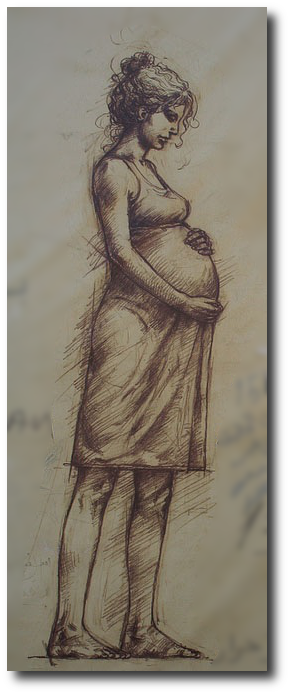
So small, I’d pet my side, running a hand over you as you swam in that fleshy cocoon that was only my skin protecting you. Like the largest blister anyone’s ever had. Artwork via and used under a Creative Commons Attribution 2.0 Generic license.
Artwork via Wikimedia Commons and used under a Creative Commons Attribution 2.0 Generic license.

I woke up after a dream where something, perhaps a snake, had sunk its teeth into my ankle. I knew I hadn’t been bit, that it was just my mind, my body remembering what that shock of teeth felt like. It mimicked the squeeze and punch of teeth that my freshman bio teacher’s boa constrictor delivered one spring. After that I always remembered to fill the snake’s water dish first, and feed the rats second.

I’d like to say I remembered a bright light, a feeling of being altered in some fashion, but no. Nothing but a niggling pain traveling in a slow orbit around the base of my spine. Right where the muscles tense during my period.

I’d reach back and rub, wondering at it like some odd pimple that might need that last satisfying squeeze. You grew quickly, not even a week and you cuddled near my ribs like I had worried up a blister on my left side. Needless to say, sleeping was a little difficult, not only because of you, but because of them. Wondering if they were watching, keeping track. Making sure I’d lose my taste for sodas, or gain it.

I wore big sweaters and loose dresses. Nothing out of the ordinary, no one would ever guess. I hid my fear well, the terror that would hit. Did I walk too close to one of the satellite dishes when I went to pay the cable bill? I remembered stories told by the head engineer of the PBS affiliate I worked at, how certain dishes could fry you from the inside out before you’d even realized it, he’d tell me as he hit a few buttons to bring down a new feed to record. That’s why it wasn’t such a good idea to shinny up a tower to steal a blinking light, no matter how tempting and candy-like they may be. But at least every month or so, one of those lights would go missing.

So small, I’d pet my side, running a hand over you as you swam in that fleshy cocoon that was only my skin protecting you. Like the largest blister anyone’s ever had.

Not a tumor, but I did worry. A parasite? Was I to finally be devoured like a paralyzed caterpillar? Had they divided me up like a diagram in an old butcher shop? Were you silently tasting me though the blood we now shared?

Forty-three days later I awoke tangled in soaked sheets. Torn with a pain that blacked everything out until the sky shone violet, the last stars fading to dawn. I woke at the prickle of sharp tiny teeth at my breast. You’d go for my heart, or nurse while my head swam with dreams of you swimming — tiny and gray — among the stars.

We woke again, you bigger and me finally fully conscious. I counted 3 pupils in each eye as you blinked. Iris the color of mine. Would they want you back?

Don’t they realize that you’re just as much mine? I refuse to be their livestock, to be bred and discarded.

We’ve started to talk. If you can call it that. You with your pictures in my head, me giving you the words in return. I can find my mind shaping those things inside yours as easily as we had shared blood, DNA, mitochondria, and maybe even something we like to delude ourselves into thinking is a soul.

It is.

I know they want you back. A success perhaps. I can feel it when you stir, swimming, grasping at what appears in front of you. Doing what all babies do, reaching for things unseen. We are charting their return, counting the minutes. Counting beyond minutes, something so different when your life is measured in speeds my species is still scratching their heads to decipher.

They can’t have you. I know you won’t go. They are only one thing. You are both and by virtue of your birth and incubation, so am I. Hybrids are stronger.

They know.

They’d better just take us both.

Leave a Reply

The King Is Dead: Long Live the King!

This is the first column in Bruce Holland Rogers’s new writing series, Technically Speaking. If you’d like to read his Short-Short Sighted columns, which are dedicated to writing very short fiction specifically, visit his author page.

Over two years ago, I set out to write a column about various forms, traditions, and techniques of flash fiction. At the time, I had about twenty topics in mind, topics that I have by now largely used up. That doesn’t mean that I’ve said everything I might want to say about flash fiction, but it does mean that I have finished with what I consider to be the most important topics. It’s time for me to move on.

Fortunately, moving on doesn’t mean going away. The editor of this site, Jake Freivald, has generously invited me to broaden the scope of my column and to write about anything that will likely be of use to fiction writers. So I’m doing exactly that. The Short-Short Sighted column has finished its run, and you are reading the first column of a new series called Technically Speaking.

The main topic of Technically Speaking will be, naturally, technique in fiction, and most columns will focus in detail on the use of some aspect of craft. However, I want to declare up front that sometimes my topics will drift over the borders of craft so that I can address the kinds of issues raised in my book Word Work (about the psychology of being a writer) or professional concerns. One reason to write a column, after all, is to have a forum for addressing current issues and events.

Mostly, though, Technically Speaking will be about techniques large and small, everything from diction and sentence structure to orchestrating characters and plotting a novel. Some columns will apply specifically to flash fiction, and I’ll always keep in mind that these columns are appearing on a site devoted to flash. But since many of the same techniques apply to fiction regardless of length, I won’t restrict my topics or my examples to short-shorts.

I hope the result will be a series of columns that writers will read, perhaps argue with, and then… largely forget.

That may seem like an odd ambition, writing columns that are forgettable. (“Yes,” I can almost hear Jake saying, “why would I want to pay Bruce to write forgettable columns?”)

Years ago, I avidly devoured the fiction columns in Writer’s Digest, written for years by Lawrence Block, and later by Nancy Kress. Most of these columns were little lessons in technique, and I would come away from them thinking things such as, “No wonder my last story didn’t sell. My character lacked attitude.” I’d make notes about what attitude was in fiction and how it worked. The topic in the next month might be titles. Again, I’d make notes, vowing to incorporate what I learned. In addition to the columns, I was reading how-to books. More notes. More determination to do everything these experts were showing me how to do.

Then I would sit down to write, and anxiety would hit. I’d write a first line, and then I’d start thinking about technique. Was that first line adhering to what I had learned in the column about beginnings? What was my character’s attitude? What was I going to title this story, anyway? Did I have too many characters? Could I combine some of them? What should I name my characters? Hadn’t I read a column about character names? Where did I put those notes? I could talk myself out of writing a second sentence because there were too many technical questions to which I did not have an answer.

All the questions and choices of technique can overwhelm a writer. The only way that most of us get any writing done is not by thinking of technique, but by actively daydreaming the lives and actions of our characters and writing down what happens.

All this brings me to the ideal and blessed state for writers when it comes to technique. Ideally, we learn everything we need to learn about technique from reading fiction. We have absorbed the possibilities of fiction by reading fiction, and when we write, we just write. We don’t think about technique any more than a native speaker thinks about the grammar of her language. The ideal writer has absorbed the grammar of fiction without knowing an instance of prolepsis from a flat character.

This ideal state is reality for a few writers. They write the draft without thinking about the choices they are making in point of view or plot. The story just comes out right. You might say that these writers are “instinctive,” but there is no writing instinct. They have learned purely by example. They can judge the next sentence they are about to write according to whether or not it feels the way the next sentence would feel in a book. The result is a story that lives and breathes.

If this is you, great! May you continue to write successfully by the seat of your pants. You don’t need this column, and thinking too much about technique might even make you lose your way by bringing your unconscious decisions to the surface where they can annoy and confuse you, where you can doubt yourself. If you’re a natural, keep right on being one!

Most of us, however, are not naturals. We have to write a first draft as if we were naturals. We have to write by feel. As in my own early experiences, if we thought about technique while inventing the story, we’ve be overwhelmed. But after we have written by feel, the result is a broken story. It walks with a limp. It smells bad. Its eyes look filmy and sick.

This is the stage when most of us should be turning to technique. All that we have learned about how fiction works is like a diagnostic manual. We can treat the story as a patient. Does your main character have an attitude? No? If your main character had an attitude, would that make you begin more interestingly? Ah, yes! A bit of attitude makes the limp go away!

So I think there are three essential steps to working with artistic technique: Learn it. Forget it. Remember it. Even the “instinctive” writer follows these steps, learning how stories operate by reading stories, forgetting those other stories while writing just this one story, and then evaluating the result according to whether it seems to be like those other stories. For the rest of it, each of these steps is liable to be a bit more overt.

Learn it. Read the fiction of other writers. Ideally, you read once as a reader, to absorb both the story and the techniques unconsciously, but then you go back and read as a writer hunting techniques. How does the writer use chapters to keep the story interesting and to make the book hard to put down? What point of view is this story written in? Why? How would the story be different, perhaps less satisfying, in a different point of view?

Learn it. Read about technique. Learn the names and uses of various techniques, along with analyses of why you might favor this technique over that one in a given story. Read about how the techniques of fiction operate in the mind of the reader.

Forget it. Just write.

Remember it. Evaluate your fiction against the standard of published fiction. Ask others to read your writing and to tell you if they got bored or found it silly at some point. Think of techniques that might spice up the boring part or make the story more convincing. Apply techniques to your revision.

Lather, rinse, repeat.

Finally, for a few weird writers (here I raise my hand), technique can become a central issue in our writing. Rather than forgetting technique when it’s time to write a first draft, we pick a technique and try to build a story around it. We choose say writing a story in the shape of a spiral, and we try to think of characters and situations that would lend themselves to the technique. But this approach is for real oddballs, and even for us, the main sequence remains the same, with with an extra step:

Learn it. Make it central. Forget it. Remember it.

So, to modify what I said earlier, I hope the contents of these columns will be useful, interesting, memorable… and possible to forget when you sit down to create.

Leave a Reply

A New Year

February 2015

Jake Freivald, Founding Editor

This is our third anniversary issue; our first issue went live in December of 2007. Congratulations to us. 🙂

I guess we like to start new things with Bruce Holland Rogers. He was one of the first authors we published, with the story “Reconstruction Work.” (The other author was Suzanne Vincent, who later joined the staff and has been instrumental to the magazine since then.) Bruce’s story went on to win the first annual Micro Award, and Bruce went on to provide us with an interview and, over time, twenty-six columns in a series called Short-Short Sighted: Writing the Short-Short Story. Bruce is still with us, but he’s creating a new column called Technically Speaking, which will focus on techniques that can be applied to any length of story. If you’re a writer, go read his introductory column. Go ahead. I’ll wait.

For readers, this month we have three excellent new stories — one science fiction, one literary, and one mainstream — and one Classic Flash.

We start with “Round Trip” by Ellise Heiskell. Although there’s not a lot of action in this science-fiction story — no laser guns or speeding spaceships — it shows pretty intensely how motherhood changes a woman. This is Ellise’s first professional publication.

Our next story is “Isabel” by Michael Plemmons. It’s a literary piece, so I’m betting that you genre junkies are going to look at it crosseyed, but it sticks with me. It’s a relationship thing. Grandma Clara talks to her granddaughter, Isabel, about fireflies and, by the end, it seems to me that the story is more about Clara’s relationship with her unnamed and barely visible daughter than with Isabel herself. Michael has been published in Sudden Fiction and had a story read aloud on NPR. (Link opens as a pop-up.)

Our final new story is “Firing Squad” by Gary Cuba. In the middle of a war, discipline is everything. Well, almost everything. Sometimes pragmatism depends on a lack of it; sometimes humanity does. Gary has been published in Jim Baen’s Universe, Abyss & Apex, Andromeda Spaceways Inflight Magazine, Fictitious Force, and Brain Harvest.

Our Classic Flash is a historical piece about “The First Puritan Christmas Tree.” Although it seems unlikely to me that the story reflects something that actually happened — it was published in an English collection of Christmas tales, and probably reflects an Anglican bias — it is, nonetheless, a lovely description that I could wish were true. And that’s what fiction is about, no?

We’ll be back in the middle of January with new stories. We look forward to seeing you then!


Leave a Reply

Join the 
Community

Support

Support lorem ipsum dolor sit amet consectetur. At dignissim neque amet proin sodales vulputate dolor elit ipsum dolor sit amet.

Subscribe

Subscribe lorem ipsum dolor sit amet consectetur. At dignissim neque amet proin sodales vulputate dolor elit.

Submit a Story

Submissions lorem ipsum dolor sit amet consectetur. At dignissim neque amet proin sodales vulputate dolor elit. At dignissim neque amet proin sodales vulputate dolor elit.