Issue April 2012 Flash Fiction Online April 2012

Familiar Epistle from a Parent to a Child Aged Two Years and Two Months

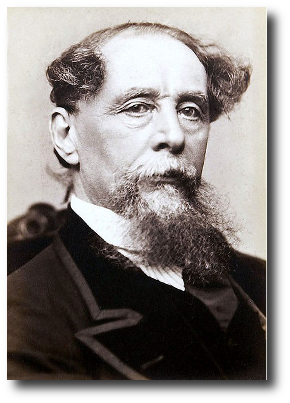
Charles Dickens, circa 1867. Artwork : This photo is in the public domain and comes to us via .
Charles Dickens, circa 1867.

MY CHILD,

To recount with what trouble I have brought you up — with what an anxious eye I have regarded your progress, — how late and how often I have sat up at night working for you, — and how many thousand letters I have received from, and written to your various relations and friends, many of whom have been of a querulous and irritable turn, — to dwell on the anxiety and tenderness with which I have (as far as I possessed the power) inspected and chosen your food; rejecting the indigestible and heavy matter which some injudicious but well-meaning old ladies would have had you swallow, and retaining only those light and pleasant articles which I deemed calculated to keep you free from all gross humours, and to render you an agreeable child, and one who might be popular with society in general, — to dilate on the steadiness with which I have prevented your annoying any company by talking politics — always assuring you that you would thank me for it yourself some day when you grew older, — to expatiate, in short, upon my own assiduity as a parent, is beside my present purpose, though I cannot but contemplate your fair appearance — your robust health, and unimpeded circulation (which I take to be the great secret of your good looks) without the liveliest satisfaction and delight.

It is a trite observation, and one which, young as you are, I have no doubt you have often heard repeated, that we have fallen upon strange times, and live in days of constant shiftings and changes. I had a melancholy instance of this only a week or two since. I was returning from Manchester to London by the Mail Train, when I suddenly fell into another train — a mixed train — of reflection, occasioned by the dejected and disconsolate demeanour of the Post-Office Guard. We were stopping at some station where they take in water, when he dismounted slowly from the little box in which he sits in ghastly mockery of his old condition with pistol and blunderbuss beside him, ready to shoot the first highwayman (or railwayman) who shall attempt to stop the horses, which now travel (when they travel at all) INSIDE and in a portable stable invented for the purpose, — he dismounted, I say, slowly and sadly, from his post, and looking mournfully about him as if in dismal recollection of the old roadside public-house the blazing fire — the glass of foaming ale — the buxom handmaid and admiring hangers-on of tap-room and stable, all honoured by his notice; and, retiring a little apart, stood leaning against a signal-post, surveying the engine with a look of combined affliction and disgust which no words can describe. His scarlet coat and golden lace were tarnished with ignoble smoke; flakes of soot had fallen on his bright green shawl — his pride in days of yore — the steam condensed in the tunnel from which we had just emerged, shone upon his hat like rain. His eye betokened that he was thinking of the coachman; and as it wandered to his own seat and his own fast-fading garb, it was plain to see that he felt his office and himself had alike no business there, and were nothing but an elaborate practical joke.

As we whirled away, I was led insensibly into an anticipation of those days to come, when mail-coach guards shall no longer be judges of horse-flesh — when a mail-coach guard shall never even have seen a horse — when stations shall have superseded stables, and corn shall have given place to coke. ‘In those dawning times,’ thought I, ‘exhibition-rooms shall teem with portraits of Her Majesty’s favourite engine, with boilers after Nature by future Landseers. Some Amburgh, yet unborn, shall break wild horses by his magic power; and in the dress of a mail-coach guard exhibit his trained animals in a mock mail-coach. Then, shall wondering crowds observe how that, with the exception of his whip, it is all his eye; and crowned heads shall see them fed on oats, and stand alone unmoved and undismayed, while counters flee affrighted when the coursers neigh!’

Such, my child, were the reflections from which I was only awakened then, as I am now, by the necessity of attending to matters of present though minor importance. I offer no apology to you for the digression, for it brings me very naturally to the subject of change, which is the very subject of which I desire to treat.

In fact, my child, you have changed hands. Henceforth I resign you to the guardianship and protection of one of my most intimate and valued friends, Mr. Ainsworth, with whom, and with you, my best wishes and warmest feelings will ever remain. I reap no gain or profit by parting from you, nor will any conveyance of your property be required, for, in this respect, you have always been literally ‘Bentley’s’ Miscellany, and never mine.

Unlike the driver of the old Manchester mail, I regard this altered state of things with feelings of unmingled pleasure and satisfaction.

Unlike the guard of the new Manchester mail, your guard is at home in his new place, and has roystering highwaymen and gallant desperadoes ever within call. And if I might compare you, my child, to an engine; (not a Tory engine, nor a Whig engine, but a brisk and rapid locomotive;) your friends and patrons to passengers; and he who now stands towards you in loco parentis as the skilful engineer and supervisor of the whole, I would humbly crave leave to postpone the departure of the train on its new and auspicious course for one brief instant, while, with hat in hand, I approach side by side with the friend who travelled with me on the old road, and presume to solicit favour and kindness in behalf of him and his new charge, both for their sakes and that of the old coachman,

Boz.


Leave a Reply

How We Met

Now come dessert and coffee and each couple telling the story of how they met. From across the table, you send a hint of a smile that is for me alone. We know how these stories go, and these couples keep to the conventions. “She was working at the bank, I knew from the first time I saw her that this was the woman I would marry.” “My car broke down, and when I called my brother to ask him to come get me, his roommate answered. My brother wasn’t there, and I started to cry, and I hadn’t even met Jerry then, but he told me to stop crying because he would come get me.”

We don’t know these couples. We don’t know what parts of their stories they might be leaving out. But we do know Danielle and Chuck, who aren’t here but whose story is typical in what it omits. “We kept running into one another in different places,” Danielle will say if prompted for their story. “At the grocery store, in the park, in the library.” She won’t mention Chuck’s ad in the personals, the effort that each of them made before all of these chance meetings started taking place. Every word the story she tells is true, but not as true as the story she doesn’t tell.

When it’s our turn, you say, “There isn’t much of a story.” You tell what little there is. We were working for different companies in the same office building, and saw one another every day, and often ate lunch at the same time in the first-floor deli. And one day, we talked, had a real conversation, and we each thought — you look at me as if for confirmation — we each thought that there might be a match here, something worth pursuing. We were both divorced, both a bit leery. But we gave it a try. Actually, things didn’t seem too promising after the first date, but we kept seeing each other, and we got used to one another. We made the effort.

No moment of certainty. No hand of fate steering us into one another’s arms. We each made the tiny decisions in our lives, one decision after another, that brought us close enough to decide on this union. We know it doesn’t sound romantic. It’s a pity to have us go last. Our story kills the mood.

There’s another way to tell our story, but I keep it to myself. It’s a version that I don’t tell anyone, not even you. Especially not you, not now, because it contains a sort of betrayal.

I started smoking when I was twelve, sneaking one or two cigarettes at a time from my mother’s purse or my father’s dresser. I chose tobacco, chose it deliberately, and had to apply myself at first to smoke a whole cigarette all the way through. By the time I quit, smoking was easy. I had been smoking a pack a day for twenty years, and the difficult choice, but another choice I made deliberately, was to leave tobacco alone. I was well past cravings by the time you and I were working in the same building, but I had the zeal of the converted about smoke. I hated the smell, especially when I was eating. I ate my lunches in the deli — the place where I saw you most often — because smoking wasn’t allowed. If I hadn’t smoked for all those years, we wouldn’t be together.

Another example. When I was ten years old, I set off a whistling rocket underneath my big brother’s car, and the shriek of the whistle, the bang of the report, left a ringing in my ear that I still hear to this day. People on my right side have said things that I misunderstood, or did not hear at all, because of that partial deafness. Since childhood I have missed hearing things that would have made me feel better or worse at a certain moment, would have made me choose to spend my allowance rather than save it, and without the saved allowance I would not have bought the book of science fiction stories that made computers exciting to me. I would have ended up following some different path in life that would have brought me to a job in a different sort of building in a place many miles or many states away from you. Every little choice I made, to light the fuse or not to light it, to drop the French class or stay in, to go home because I was tired or go to the party anyway, every little choice added up to the life where I would find myself married to you. Any other choice, anywhere along the line, and I would have missed you.

That’s why I regret nothing. I used to wish I had never smoked. I used to wish I hadn’t lit that blessed fuse under my brother’s car, but the ringing that I always hear is a small price. I used to wish I had persisted and learned a foreign language, but then I might have gone to France to try it out, and who knows where that might have taken me? Everything had to happen just as it did for me to find myself with you. I regret nothing, and nothing can make me regret, not even the white spot in the chest x-ray which, I swear, I will tell you about soon.


Leave a Reply

213 Myrtle Street

by Beth Cato

January 2015

The house at 213 Myrtle Street wore an enchantment that could obscure it when it so desired. This was a handy skill, particularly when salesmen roved the streets or teenagers skulked about after dark, eggs in hand.

Now there was a realtor at the gate. The smell of dozens of strange, foreign houses clung to her clothes.

The house ached in its abandonment. Mrs. Leech was gone. A stranger had to lock the door behind Mrs. Leech when she last left the house, still asleep as she was rolled along on a strange wheeled bed. They shared a comfortable existence together, woman and house. Mrs. Leech had been a mere slip of a girl when her family moved into 213 Myrtle, the place still ripe with fresh paint and cut lumber. Her parents left, then her husband, but Mrs. Leech stayed. Her bones creaked along with the settling of the pipes at night.

The house did not want a new owner. It did not like the thought of condemnation and rot, either.

Mrs. Leech just needed to come home. The porch needed sweeping.

Therefore, when the realtor arrived, 213 Myrtle Street hid. The woman strode up the front walkway, heels clicking a powerful rhythm, and she stopped.

“House, you’re not going to play this game, are you?”

The house was indignant that this person saw through its glamour so quickly. Certainly it wasn’t losing its skill? 213 Myrtle waited. The woman waited, too. The soles of her right shoe went tap-tap-tap. Finally, grudgingly, 213 Myrtle acquiesced. Its powder blue wood-paneled exterior emerged. The front steps creaked as the realtor hopped up to the porch.

“You old houses can be so temperamental,” she said, fondness in her voice. “Enchantments like that add to your value, you know. Goodness knows, I wish my condo could hide, but no one would believe the illusion.”

The house was quiet. It’s not as if it could speak or answer, not as a person would, but it was quite adept at conversation. Mrs. Leech would chat with the house for hours.

“Now,” said the woman. “I have to look you over to prepare you for sale. All the money’s going to go towards the Children’s Club.”

Mrs. Leech had taught for fifty years and mentored well beyond that. 213 Myrtle Street was accustomed to being an after school destination. As a rule, the house did not like children, especially young ones who scribbled on walls, but Mrs. Leech had always made sure her charges treated the household with proper respect. The house had to admit it enjoyed the extra wear of feet on its veneered floor and the buoyant laughter that floated to the rafters.

The woman placed the key in the lock, the same familiar key the house had known for years and years. The house clenched the door frame.

“Now, house,” she said. “Please.”

There was something comfortably soothing about her voice and manners, but the house hesitated. This was a realtor. The house did not intend to be sold.

213 Myrtle could burn down. It would be very easy. The old wires itched in the hollow spaces between walls. Yet the house hesitated. Was that really what it wanted, the complete death of its timber and memories? Was that truly preferable to new residents or — Wright forbid — renters?

Mrs. Leech would come back. She would need a place to sleep. The house couldn’t burn.

The woman rested a hand against the doorframe. A memory trickled through the layers of paint and aged wood. It understood: this was a good hand.

213 Myrtle Street relaxed. The door unstuck.

The realtor’s footsteps echoed. 213 Myrtle Street felt the reverberations. It had been an awful day last week when all of the furniture had been moved out. The house had tried to hide then, too, but movers were all too familiar with the wily ways of old and enchanted houses.

Where would Mrs. Leech sleep? Where would she sit?

“My goodness. So empty.” The woman shook her head, then pulled out her phone to begin jotting down notes. The house heard her whispers. “Bay window with bench seat. Kitchen with 1950s appliances, in perfect repair…”

She walked onward, a scent of jasmine trailing in her wake. It reminded the house of the scent Mrs. Leech used to wear, so long ago, when Mr. Leech lived there as well. He would come to the door in that khaki uniform. The happiness of Mrs. Leech’s rapid footsteps used to make the household quiver in anticipation.

Sadness ached in its support beams. The electrical wires pulsed.

The realtor laid a hand against the wainscoting in the dining room. The body warmth soothed the glossy paint all the way to the primer.

“I have so many good memories in this room,” said the realtor. “We’d all gather around the table. Mrs. Leech always had cookies, and we would sit there, do homework, crafts.”

The floorboards creaked. The woman’s weight was different, the shoes new, but the house suddenly understood. Knew this as a child, grown.

“Mrs. Leech loved this place. Before she passed on, she made me promise to find good, new owners for you. People who would love you as much as she did. You can have a family live here again.” She patted the paneled wall.

213 Myrtle Street felt the touch all the way to its disused pipes. This girl’s fingers had dragged along the walls, so many years before. This realtor was not such a bad person. The house wouldn’t hide from her, or the guests she brought. And having a family here was a good thing. They could bring new furniture, new footsteps. Besides, Mrs. Leech would love the company when she returned.

213 Myrtle Street nestled against its concrete foundation and waited.

Comments

  1. RosellaLewis says:
    Gah, why am I tearing up?
  2. AdinaRiveraTowell says:
    RosellaLewis  The house was happy that it was going to get a new family. It was sweet.

Leave a Reply

Join the 
Community

Support

Support lorem ipsum dolor sit amet consectetur. At dignissim neque amet proin sodales vulputate dolor elit ipsum dolor sit amet.

Subscribe

Subscribe lorem ipsum dolor sit amet consectetur. At dignissim neque amet proin sodales vulputate dolor elit.

Submit a Story

Submissions lorem ipsum dolor sit amet consectetur. At dignissim neque amet proin sodales vulputate dolor elit. At dignissim neque amet proin sodales vulputate dolor elit.