Issue May 2010 Flash Fiction Online May 2010

Table of Contents

The Beggars

by Lord Dunsany

February 2015

I was walking down Piccadilly not long ago, thinking of nursery rhymes and regretting old romance.

As I saw the shopkeepers walk by in their black frock-coats and their black hats, I thought of the old line in nursery annals: “The merchants of London, they wear scarlet.”

The streets were all so unromantic, dreary. Nothing could be done for them, I thought — nothing. And then my thoughts were interrupted by barking dogs. Every dog in the street seemed to be barking — every kind of dog, not only the little ones but the big ones too. They were all facing East towards the way I was coming by. Then I turned round to look and had this vision, in Piccadilly, on the opposite side to the houses just after you pass the cab-rank.

Tall bent men were coming down the street arrayed in marvelous cloaks. All were sallow of skin and swarthy of hair, and most of them wore strange beards. They were coming slowly, and they walked with staves, and their hands were out for alms.

All the beggars had come to town.

I would have given them a gold doubloon engraven with the towers of Castile, but I had no such coin. They did not seem the people to who it were fitting to offer the same coin as one tendered for the use of a taxicab (O marvelous, ill-made word, surely the pass-word somewhere of some evil order). Some of them wore purple cloaks with wide green borders, and the border of green was a narrow strip with some, and some wore cloaks of old and faded red, and some wore violet cloaks, and none wore black. And they begged gracefully, as gods might beg for souls.

I stood by a lamp-post, and they came up to it, and one addressed it, calling the lamp-post brother, and said, “O lamp-post, our brother of the dark, are there many wrecks by thee in the tides of night? Sleep not, brother, sleep not. There were many wrecks an it were not for thee.”

It was strange: I had not thought of the majesty of the street lamp and his long watching over drifting men. But he was not beneath the notice of these cloaked strangers.

And then one murmured to the street: “Art thou weary, street? Yet a little longer they shall go up and down, and keep thee clad with tar and wooden bricks. Be patient, street. In a while the earthquake cometh.”

“Who are you?” people said. “And where do you come from?”

“Who may tell what we are,” they answered, “or whence we come?”

And one turned towards the smoke-stained houses, saying, “Blessed be the houses, because men dream therein.”

Then I perceived, what I had never thought, that all these staring houses were not alike, but different one from another, because they held different dreams.

And another turned to a tree that stood by the Green Park railings, saying, “Take comfort, tree, for the fields shall come again.”

And all the while the ugly smoke went upwards, the smoke that has stifled Romance and blackened the birds. This, I thought, they can neither praise nor bless. And when they saw it they raised their hands towards it, towards the thousand chimneys, saying, “Behold the smoke. The old coal-forests that have lain so long in the dark, and so long still, are dancing now and going back to the sun. Forget not Earth, O our brother, and we wish thee joy of the sun.”

It had rained, and a cheerless stream dropped down a dirty gutter. It had come from heaps of refuse, foul and forgotten; it had gathered upon its way things that were derelict, and went to somber drains unknown to man or the sun. It was this sullen stream as much as all other causes that had made me say in my heart that the town was vile, that Beauty was dead in it, and Romance fled.

Even this thing they blessed. And one that wore a purple cloak with broad green border, said, “Brother, be hopeful yet, for thou shalt surely come at last to the delectable Sea, and meet the heaving, huge, and travelled ships, and rejoice by isles that know the golden sun.” Even thus they blessed the gutter, and I felt no whim to mock.

And the people that went by, in their black unseemly coats and their misshapen, monstrous, shiny hats, the beggars also blessed. And one of them said to one of these dark citizens: “O twin of Night himself, with thy specks of white at wrist and neck like to Night’s scattered stars. How fearfully thou dost veil with black thy hid, unguessed desires. They are deep thoughts in thee that they will not frolic with colour, that they say ‘No’ to purple, and to lovely green ‘Begone.’ Thou hast wild fancies that they must needs be tamed with black, and terrible imaginings that they must be hidden thus. Has thy soul dreams of the angels, and of the walls of faëry that thou hast guarded it so utterly, lest it dazzle astonished eyes? Even so God hid the diamond deep down in miles of clay.

“The wonder of thee is not marred by mirth.

“Behold thou art very secret.

“Be wonderful. Be full of mystery.”

Silently the man in the black frock-coat passed on. And I came to understand when the purple beggar had spoken, that the dark citizen had trafficked perhaps with Ind, that in his heart were strange and dumb ambitions; that his dumbness was founded by solemn rite on the roots of ancient tradition; that it might be overcome one day by a cheer in the street or by some one singing a song, and that when this shopman spoke there might come clefts in the world and people peering over at the abyss.

Then turning towards Green Park, where as yet Spring was not, the beggars stretched out their hands, and looking at the frozen grass and the yet unbudding trees they, chanting all together, prophesied daffodils.

A motor omnibus came down the street, nearly running over some of the dogs that were barking ferociously still. It was sounding its horn noisily.

And the vision went then.
Leave a Reply

Sea Anemones

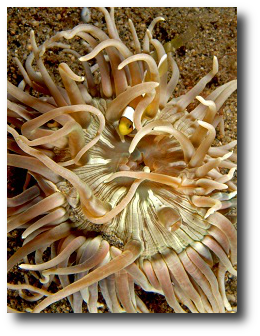
 the sea anenome. Artwork : Photo courtesy of and used under a   license.
Dofleinia armata, the sea anenome.

This story collection is an exemplar for Short-short Sighted #22, “Metamorphosis and Compassion”.

In a little church by the sea, long after the old gods had begun to sleep, there was a preacher of the Christian gospel who earnestly worried for the souls of his congregants. He wanted every one of them to one day arrive safe in the Father God’s heaven, so he harangued and exhorted them about all the temptations that might lead them astray. He was particularly worried about the sorts of love and lust that Father God had condemned.

He had a strong voice and chose his words well. His predecessor, though no less earnest, had been a stoop-shouldered, colorless little man. For listeners in the last pews, this previous preacher’s drone from the pulpit was sometimes lost in the sound of waves crashing against the rocky shore. Old people dozed. So did some who were not so old.

This current preacher, though, belted out his verses and his warnings loud enough to wake any sleeper. “Men,” he cried, “can you imagine lying with another man, receiving him as you would have your wives receive you? Women, can you imagine kissing and embracing another woman as you would your husband?” There were other kinds of love prohibited by the Father God, but the preacher often dwelt on these particular sins, his voice thick with a disgust that his listeners could not help but feel themselves. No, they could not, dared not imagine the sort of passion that the Father God had prohibited. “Unnatural acts. Ungodly, and unnatural acts!”

These words, carried on a thunderous voice, vibrated in the ear of Cupid, who woke from that slumber that the old gods had been sleeping these many centuries. The son of Venus felt provoked by what he heard.

As Apollo learned long ago, it is dangerous to provoke Cupid. The sun god, boasting about the sky python he had killed with an arrow, said that it was the shoulder that made the archer. He compared his massive arms to Cupid’s and concluded that while Cupid might carry a bow, it was but a toy compared to the charioteer’s. Cupid replied that a hunter is known by his prey, and that if he felled Apollo, didn’t that make him the greater archer? He sent a golden arrow into Apollo’s heart and a leaden one into the daughter of Peneus. Apollo could think of nothing else but this girl who suddenly despised all thoughts of men or marriage, and he never did win her.

Not only slander, but subtler things might provoke Cupid. He felt irked by his mother’s constant demands. “Shoot Neptune, my son! Let’s rouse the cool sea god to feverish passion. Oh, there’s Ceres, trying to keep her tasty daughter a virgin forever. Put an arrow into Pluto, my boy, and show that even Mister Gloom can’t resist us.” She picked mortal targets for him, too, as if she forgot whose arrows these were. So one day when she embraced him fondly, as a mother will do, he let a golden arrow graze her breast. A mere scratch, he gave her. She did not even notice the injury, but she did notice the mortal Adonis, a hunter. They made an unlikely pair, for Venus thought that traipsing through the woods and stabbing animals was the sort of work best left to servants or cold-hearted Diana, who never cared how she looked before men, anyway, with her troupe of girls who admired the huntress for her skill and wit more than her beauty. But Venus! Hunting! She would never have imagined herself doing anything of the sort.

That was a sight, then, the goddess of love in her filmy gowns getting twigs in her hair and dirt on her sandaled feet, following Adonis from one bloody scene to another.

So Cupid went to this church by the sea, offended. He would shoot where he pleased, and how dare any mortal express such disgust at some of the results? He sat in the rafters, rubbing centuries of sleep from his eyes, and listened. When the preacher said again, “Just imagine…,” Cupid smiled.

His arrows never were his only weapon, merely the most selective. Cupid’s quiver also held stoppered bottles, and one of these he uncorked to pour a golden mist over the congregation. For the first time, in all the times the preacher had said, “Just imagine,” they could. “Just imagine, men, accepting another man as your lover.” And the men imagined their hearts full of longing for another man. “Women, just imagine that you would have another woman standing in the place where God has given you your husbands.” And the women imagined their lips burning for another woman’s kiss.

As the mist was not selective, neither was its effect. The men felt the lure of no particular man; the women lusted for no particular woman. The embraces they imagined were general, universal, and joyous. Even the preacher felt the effect of the mist, though it reached him last. He paused, thinking a pleasant thought about his hand closing tenderly around…

But, no, he would fight this thought. This was wrong, and he would summon the will to be disgusted, though there was a fire in his blood now. The congregation sat stiff, in more ways than one, not daring to move, willing themselves to stop thinking what they could not cease to think.

These were pious people. They had been schooled all their lives to revile the sin of indiscriminate love. Their mortal souls were at stake.

Cupid didn’t care. He poured it on, unstopping another vial of his funky mist, and then another. What the congregation began to feel was beyond sin, as everything in that spare sanctuary seemed to undulate and wink and promise. The wood grain of the pulpit swirled and twined with breathtaking beauty. The virginal white walls seemed made for caressing. The hard pews pressed so lovingly against back and buttocks that one woman groaned aloud with pleasure.

With that groan went the last of their resistance, except for one tiny gasp from the preacher and his one word, “No.” Then they were all gazing in rapture at the room around them, at each other. They tasted the perfume of ordinary air, wanted to embrace the earth itself. They felt the tender caresses of their clothes for the first time, the erotic whisper of cloth against their skin.

They might have fallen upon one another, men on women on women on men on men, but the desire they felt was not merely for each other, but for everything. A breath coming in was a lover arriving. A breath going out was a lover’s momentary, aching departure.

They spilled out of the church, wanting the rough or smooth bark of the trees, the bright lovesong of birds, the sensations of grass and sky and sand. They wanted everything all at once, and could not choose among their many lovers until someone, it may even have been the preacher himself, said, “The sea!”

The sea was a lover that would embrace each body everywhere at once. The sea was a lover vast enough to receive them. They ran, hearts pounding with lust and joy. Across the tide pools they ran, scattering seagulls that they loved, glimpsing starfish that they loved, thinking tenderly of the limpet’s embrace of the thoroughly embraceable rocks, but not pausing for any of these. They ran, feet splashing into the sea.

Some fell and cut their hands and knees on the jagged barnacles that they loved. They got up. They kept going, wading out to let the sea embrace their knees, to soak through their clothes to their loins, to accept them up to their chests, their shoulders, their ears. They tasted the salt of this lover who could be, for a moment at least, all lovers. Their mouths filled with the sea’s kisses.

Cupid would have let them drown.

Their splashing and tasting, the thrusting of their hips in the water, their answering undulations to the waves…all of this roused Neptune. Is it any wonder? Who would not be roused from sleep by that?

The sea god looked into their hearts and saw what they wanted. He touched them with his weedy fingers, and their feet held firm to the sea floor. They shrank beneath the waves, softening, yielding, their mouths puckering for a kiss. With another touch, Neptune removed from them any memory of what they had been before, male or female, and made each a bit of both.

They are there to this day, clinging to the bottom of the sea, loving the water, loving the rocks beneath them, loving the fish that they hug with their tentacles in an embrace that ends with digestion, for they kept the aching effects of Cupid’s spell. No one but the archer himself can undo that.

Desire is always with them. It overcomes them on nights of the full moon when the water grows cloudy with their sperm and starry with their eggs.

Leave a Reply

Fool’s Fire

by Hayley E. Lavik

February 2015

But he doesn’t see me. I wave my arms. Cry out and burble frog slime out my throat. The old lamp clanks in my hand. Dead. If only — no wait, there it goes. Artwork by on Flickr and used under a license.
Artwork by cayusa on Flickr and used under a Creative Commons Attribution Non-Commercial license.

It’s the cold mud that wakes me, and the taste of duckweed in my throat. In my mouth, my nose, my ears. It fills my lungs, creeps behind my eyes. I burst through the slime with a half-formed scream.

I retch until I feel empty, hollow, withered. Stagger to my feet, knee-high in the sticking black mire. The mud keeps oozing from my eyes. Fetid bog slime on my arms, my breasts, my mother’s finest dress. Torn bodice, rent seams in starlight. Embroidered with weed, black mud in a putrid train behind me. But where is he?

My darling, he said he’d meet me, come for me by the hunter’s moon. I stumble through the viscous fluid, water thick and oily from the bodies of fallen trees, dead frogs, all rotting. Rotting in the mud with me.

Branches clutch my arms but I don’t care. Let them tear my dress, my darling will not care. He will greet me with joy when I come to his arms. Said he’d meet me here, before I awoke in the mud.

No moon. Groping at moss-slick trunks in the dark, trees coated with old-man’s-beard like rotting bridal veils. Glistening shelves of fungus. Mother used to say the wee folk met on those shelves for tea and biscuits, to gossip on the lives of mortals. I can hear them laughing now. Foolish little rich girl runs off in the night, wakes up screaming in the mud. Buried in the mud.

I can hear them. Shivering hiccups of sound echoing over the marsh. Laughing, mocking.

No. Singing! Yes, it is singing, a man singing, and he can’t hide the tremor in his voice. Oh, my darling, I am here! You’ve not lost me!

I try to call out, but the mud burbles up again from the hollow pit of my stomach, oozing out my open throat. Choking. A necklace of filth and blood like black diamonds to match my mother’s dress.

I stumble, my bare foot catches on something, and I plunge into the slime. The singing stops.

I clutch at dead sticks, swamp cabbage, pulling myself up. No moon. My darling said he’d come for me by the hunter’s moon, the blood moon. Did he come? Did he wait, not knowing I slept under the mud?

My hand hits something, submerged in the water. I grab for it, sinking my fingers into the filth. Mother would be aghast if she saw me treat my nails so. If she knew I was here. Never told her. Stole her dress and crept out the back gate.

The lamp is thick with slime when I pull it up, caked with layers of residue, rusted hinges, but I still recognize it. The oil lamp. I run my nails over the glass. My darling always liked them long, my long nails, long claws scraping glass. I must have dropped it. It won’t burn now, won’t light my way home.

He’s whistling now, and my head snaps about. I see him. Oh, my darling, look my way! Come to me!

But he doesn’t see me. I wave my arms. Cry out and burble frog slime out my throat. The old lamp clanks in my hand. Dead. If only — no wait, there it goes.

A hollow flame like verdigris burns in the watery depths of the glass. A dim, submarine radiance cast about the marsh. He sees my light.

Come, my darling. Come to me.

I raise the lamp, shine its murky light on my face, pallid breasts above the rent neckline, so he’ll know me. He watches the light, his beautiful eyes enchanted with its eldritch fire.

I cannot speak, throat parted like two pliant lips, so I bob the light to beckon him on. Come. Come, let me show you where I lay. Come, let me show you why you could not find me.

He stumbles, sinks into the water. It swarms up to his chest, gurgles about his arms. The water swirls about my slender calves as I lead him on.

He is lovely in the mossy light, his mouth slack and hair dishevelled — but darling, your hair was never curly before.

The lantern sways as I beckon him on. My darling, how I’ve missed you. I’ve been under the ground so long, asleep in the dark.

The mud catches him, the mud that burbles from my throat, and he grasps for me, all flailing limbs and wild eyes. The dead space in my chest beats again with longing, peat throbbing in the hollow beneath my breast.

I bend to him, and the lantern dances in his face. But — Oh!

This face is not my darling’s face. These hands that claw my ankles are not his hands. He thrashes, his mouth twists up as the mud sucks him down. Such a beautiful smile! Just like my darling’s smile. It must be his.

I catch him, sink my claws into his arms so the mud will not take him. I embrace him, kiss him, the mouth I’ve longed for in the dark.

I take my darling’s smile. Eat it. Swallow it. It runs warm and soft into my stomach, filling the hollow pit with blood-hot kisses. The rest I let go, give to the mud, so kind to me, sheltering me until my darling’s smile found me.

When the rest of my darling comes to me, I will collect the pieces, hold them warm inside me until I have them all.

My lantern dims, but I know its eldritch fire will dazzle my darling’s eyes again. I will wake when he comes near, and I will lead him to me. And piece by piece, I will make him whole again.

Leave a Reply

Metamorphoses and Compassion

Read Bruce’s previous column here, or visit his author page to see them all.

Zeus was the original Peeping Tom, hiding himself to watch human or divine maidens while they bathed. He particularly liked following Artemis and the nymphs who attended her on her hunts. One nymph in particular appealed to him. Callisto was her name. Zeus longed to lie with her, but he had to be careful. For one thing, Artemis was a force to be reckoned with, and any male who met her in the woods could count on trouble whether he was mortal or divine. For another, Zeus had to contend with his wife, Hera. She was always prying into his affairs.

But Zeus was resourceful. Not for the first time, he disguised himself for the purpose of seduction. He had disguised himself as a swan to lie with Leda, and he had stolen Danaë’s virginity after taking the form of a shower of gold. He really had to congratulate himself this time, though. When Callisto trailed a little behind the other huntresses, Zeus changed himself into the mirror image of Artemis herself. Callisto didn’t suspect a thing until well into the seduction, by which time it was too late for her.

Zeus also batted a thousand when it came to reproductive success. He had been with Callisto only once, but she soon discovered that she was pregnant. It wasn’t long before Artemis noticed poor Callisto’s swelling belly and exiled her from her company of virginal huntresses. Hera observed this from afar, and although Hera hadn’t caught Zeus in the act, she was pretty sure who the father must be.

Hera had the bad habit of blaming the victim. She was furious at Callisto for catching her husband’s eye and turned her into a bear. Her plan was to have Artemis come upon Callisto, mistake her for an ordinary bear, and kill her. But Callisto still had her wits about her and hid from her former mistress.

Zeus saw all of this. He didn’t dare to interfere directly, but he did arrange for Hermes to follow Callisto around. When she gave birth to a boy child, Hermes took the infant to be raised by a foster mother. In time, the baby called Arcas grew into a young man. When he had seen sixteen summers, he was out hunting one day. Callisto had been hiding from the greatest of all hunters through all these years, but when she caught scent of her son, she knew who he was. She lost all reason. She burst from the undergrowth where she had hidden and rushed toward him, growling his name, longing to embrace her child.

To Arcas, she was an attacking bear. He raised his spear.

Zeus, still watching the mortal world from afar, was appalled by what was about to happen. A son slaying his mother, even unknowingly, was one of the greatest sins imaginable. Before Arcas could launch the spear, Zeus hurled both mother and son into the sky, where they became the constellations we know as Ursa Major and Ursa Minor.

And that, dear readers, is a metamorphosis tale, a story well suited to flash fiction. The structure for such stories is straightforward and pivots on a single point: someone is permanently turned into someone or something else. Before the metamorphosis is the story of what led up to the transformation, and often the story lasts long enough after the transformation to consider its significance.

Classical mythology is loaded with stories of metamorphoses that explain the origins of celestial sights or the habits of earthly plants and animals who were once human. But a story of metamorphosis doesn’t always have to work along the classical pattern. One section of my collection The Keyhole Opera consists of metamorphoses, and I fiddled with the pattern. In one story, a goddess who starts out as a celestial body is given human form and a life on earth. In another, the scraps of fabric that a quilter has never gotten around to using comes to life after the quilter’s death.

The sample story for this column, “Sea Anenomes,” is actually the most traditional of my metamorphoses, featuring a classical god who, irritated by the behavior of mortals, teaches them a permanent lesson. As long as the story is about the causes of a lasting transformation, and as long as that transformation seems meaningful, the reader is likely to be satisfied.

There is one risk to writing a metamorphosis story, and it refers to the phrase teaches them a lesson. The temptation in a metamorphosis story is to tell the tale of your class enemies, your ideological enemies, your artistic rivals or irritating relatives getting what they deserve. That’s probably going to result in a weaker metamorphosis than you might otherwise write. Why? Because fiction is a poor vehicle for delivering justice or winning arguments. (It might be good for delivering revenge, but revenge hardly ever overlaps with justice.)

No doubt you’ve heard the advice before: If you want to preach, write a sermon. We don’t read fiction in order to make up our minds about vital issues. Or at least, we shouldn’t. Fiction can win no arguments with skeptical readers. How could it? Fiction is the ultimate stacked deck. Nothing happens in the fictional world unless the writer, the dictator of that fictive reality, makes it so. Sure, fiction can get us worked up about the writer’s version of reality. Historical fiction can even infuriate us about what bastards the English were. Or the French. Or the Americans. Or the Russians. Or the Hungarians. (Everyone takes a turn in history being the bad guys, it seems.) But surely you wouldn’t convict a nation or a generation on the basis of fictional testimony, would you?

When I taught undergraduate creative writing, I’d be reminded of fiction’s weak powers of argument at least once a year when a student would write an Issue Story. The story would be fiercely pro- or anti-. The characters who agreed with the writer’s view were good, and the characters on the other side were bad. Only the good guys were smart and argued well. Only the good guys had really thought about the issue or had deep feelings that the reader could understand. Usually the Issue Story was about abortion, but not always. Usually the abortion stories were pro-life, but not always. The only thing reliably true about these Issue Stories was that they were awful. Half of the characters, the ones who represented the other side of the issue, were flat and unrealistic. As a result, any reader who identified by that side of the argument felt misrepresented.

A story of metamorphosis in which Bad Guys Get Punished will perhaps earn the writer cheers from those readers who have the same enemies, but it will fall flat for readers who identify or sympathize with the supposed bad guys. The stories that I most enjoy reading, the stories that I hope to write, are stories that treat all their characters with compassion. The Issue Story that I never saw in an undergraduate class was one where I couldn’t tell, by the end, what the author’s own position was, where the thoughts and feelings of characters of both sides of the issue made me care about them.

Writing compassionately about all of our characters deepens our fiction. A sympathetic bad guy who is destroyed in the end is tragic. He’s also more real to us than a straw man erected only for the hero to knock over. Even in flash fiction, where there may only be room enough to create a character as a type, compassion for even these flat characters will make the story more convincing.

Sea Anenomes” is my own version of an Issue Story. It does express some mockery of the idea that some kinds of sex or affection are “unnatural,” but the story is not an argument to be won or lost, and I certainly hope that readers who disagree with my opinion can read the story with pleasure. I hope that even the abbreviated characters in this story do not seem to paint people as less than what they are.

In flash fiction, even in satirical, we have enough words to express something more compassionate and fair than Bad Guys Lose.

Leave a Reply

Candy Floss Time

by Amy Treadwell

February 2015

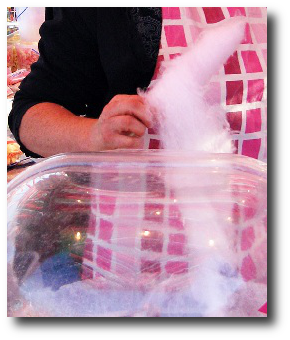
 Artwork Image courtesy of Andrew Dunn via and used under a license.
Artwork Image courtesy of Andrew Dunn via Wikimedia Commons and used under a Creative Commons Attribution Share-Alike license.

The free carnival pass dropped through Penny’s mail slot on Wednesday, exactly ten months after her mother died, three weeks after her son was born, and seven days before she planned to drive her car off Myrtle Pier.

Penny had shoved the stack of letters behind the door, along with other bills piling up since she’d gone to the hospital, so she didn’t discover it until the day of the event. It was bright pink cardstock and floating, along with soup tins and orange rinds, across the linoleum end of her one-room flat.

“Christ,” she said.

She considered going to bed until the baby stopped crying. A helpless, inconsolable loss welled up at the thought of touching him. She thought of walking out, but she couldn’t. What would the neighbors think? She pressed a hand to her forehead.

She should call the landlord about the pipe. There were so many things she should do, but none of it would matter after her car came back from the shop next week.

She opened the door to her flat and let the water spill out.

The pink card fetched up against the corner rail.

She picked it up.

The carnival was crammed into a narrow lot among row houses. She passed cinnamon almonds, a ring-toss, pony rides. The baby fretted in her arms.

“Penny for the ferryman?”

Penny glanced around. Games of chance, handcrafts. No one paid her any mind. Then she saw a wizened old woman up the way. She stooped toward Penny with the directness of a compass needle, if compass needles were bent like fish hooks. She had bluish hair, a pin that said “Ask me about scissors!”, and she worked a candy floss stand.

Two other women stood with her. The second was rail thin and stirred an empty pot. The third was plump, with dangly earrings. They all wore gold tennis shoes.

The plump woman beckoned. “You must be Penny! I’m so glad you saw the card. Don’t mind Morta. She doesn’t get out much.”

Morta crossed her arms. “I get out as much as you!” To Penny, she said, “Decima hates that I get the last word.”

“I do not!”

“Yes, you do.”

“No, I don’t!”

“See, you can’t let me win.”

“Hush, both of you!” The thin woman dropped the cardboard stick in the empty pot. “Did she bring the child?”

“Yes, Nona.” Decima’s face softened. To Penny, she said, “It’s good that you did. Can’t be too far gone, if you brought the child. Oh, don’t mind Nona, she’ll be wanting to hold him.”

Penny sidled. These women were mad as spoons. “How do you know my name?”

Morta laid a finger alongside her nose and said, “We’ve been waiting for you. We’re good at waiting.”

“Hush, now,” said Decima. “You’ll scare her witless.”

“Can we spin him a candy, dear one?” asked Nona.

“I can’t pay for it,” Penny said. Mentally she added, And you’re not spinning with a full pot.

“You can work for it,” said Decima.

“I just need his name,” Nona said.

“Wait, I didn’t agree — hold on with that — ”

“His name?” Nona prompted.

The baby stirred, and women fixed on his movement.

In Nona’s pot, a wisp of candy floss grew into being.

Gooseflesh trailed up Penny’s arms. He had no name. Choosing a name made him real.

The baby wriggled in his blanket, his little arms straining to get free. Penny held him tighter and stepped back.

The floss thinned in Nona’s pot.

Morta hissed, “It’s the child’s life, not yours. Let go!”

Penny thought perhaps the sensation of falling was only in her mind. Whatever it was, it happened when her gaze had snared on the flytrap of the old woman’s eyes. Now she was a speck on the bank of a black river. Cold, slow currents moved there. She readied herself to fall back. Her tension was gone. All emotion was gone. The last petals enclosing her grief fell away.

It was memory that washed over her. Her mother’s death. Loneliness. Sex, lots of sex, terrible mindless sex. The missed period. The failed classes. Expulsion from university. Patrick’s birth.

Patrick?

The name plunged her into waking.

“There, now,” Nona soothed, and Penny thought the old woman was talking to her. Then she saw the tiny bundle in her arms.

Patrick. Penny couldn’t take her eyes off him.

“What happened?” she asked.

“You choked,” said Morta.

Decima smacked her. “You almost lost her!”

Morta shrugged. “Sometimes they just need a preview.”

Nona clucked her tongue and pointed with her chin toward the pot. Wisps grew from nothing at all into a baby blue cloud.

Penny watched it grow. It had a glitter to it, like Christmas ribbon. Her breath caught. “Wait, are you — is that — ?”

Decima gathered the floss onto her stick and Morta scraped the pot. Nona took the candy and held it near Patrick. He regarded it. The old women cooed and tickled his nose.

Penny’s chest went tight. She wasn’t a fit mother, it was true. Patrick deserved better. But still, seeing him here and real, she wanted to hold him. “Can I have him back?”

Nona said, “I think she’s ready now.”

“She hasn’t paid,” said Decima.

“But she balked at the River!”

“Nothing’s free,” said Decima, waving a finger.

“As much as it pains me, I agree with Decima. Give her a free ride and she’ll be back in a week,” said Morta. “Besides,” she glanced at Penny, “We could use another delivery girl.”

Penny climbed the stairs to a run-down flat where the smell of unwashed baby things wafted from an upstairs window. An eviction notice hid the number, but she knew this was the right place.

Patrick burbled from the sling on her back. “Hush now, Patrick.” The ghost of a smile crossed her lips. Patrick.

It wasn’t what she’d planned, but it was enough.

She dropped a pink card through the mail slot.

Leave a Reply

Join the 
Community

Support

Support lorem ipsum dolor sit amet consectetur. At dignissim neque amet proin sodales vulputate dolor elit ipsum dolor sit amet.

Subscribe

Subscribe lorem ipsum dolor sit amet consectetur. At dignissim neque amet proin sodales vulputate dolor elit.

Submit a Story

Submissions lorem ipsum dolor sit amet consectetur. At dignissim neque amet proin sodales vulputate dolor elit. At dignissim neque amet proin sodales vulputate dolor elit.