There’s something about March in the northern hemisphere. Something bleak, something hopeful, something decidedly cold and warm, wet and dry, all at once.
To give a fictional face to that contradiction, I’ve chosen Dave Tallerman’s “For Life,” a tale of a man coping with grief and a grieving father, and Alisa Alering’s “Keith Crust’s Lucky Number,” a quirky story in which a numbers-obsessed guitarist finds more than he bargained for at the local pawn shop.
For our Classic Flash, we reach back to Alice Dunbar-Nelson for a lovely melodramatic bit of Victoriana called “Violets.”
Might be appropriate for Spring/Easter, though it is somewhat gloomy.
If you’re not friends with us on Facebook or following our Twitter feed or reading our blog, maybe you should be.
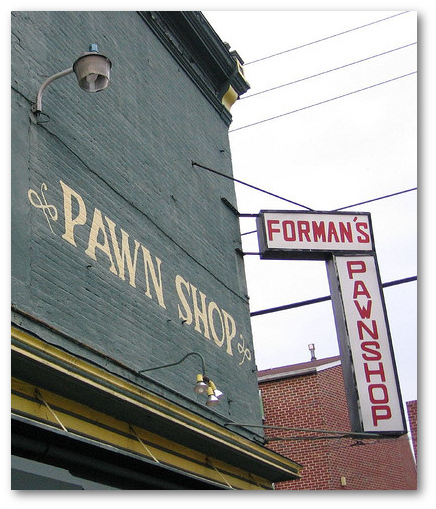
Courtesy of “Waving at You” on Flickr: http://www.flickr.com/photos/wavingatyou/1479242117/
Keith thought he was looking for a new guitar. The brass numbers, 2281, nailed above the door of Vic’s E-Z Pawn told him to go in. He trusted the numbers. If you added 2+2+8+1 you got 13, which was lucky, because that’s how old he was when he started.
Keith pushed open the door.
“Help you?” A young woman sat on a barstool, her cowboy boots propped on the counter. She was reading a book about Roswell, a horse-faced alien looming on the cover.
He looked around the shop crowded with golf clubs, moose heads, and wedding rings. On the back wall hung a mandolin, an electric bass, and — was that a 1974 Gibson Les Paul? Oh, lucky thirteen.
“The guitars,” he said.
The woman stood. The fan whirring on the counter rippled her dress around her legs. She had nice knees. She got the maybe-Les-Paul down for him. He ran his hands over the body, plucked the strings. This could be the day that changed everything.
She watched him, standing close. “If you ask me, it’s not a guitar you need.”
His fingers stilled. She smelled of peach iced tea.
“What do I need?” He plugged into a nearby amp, and slid his fingers up and down the scales.
“A love potion.”
Woo-woo alarms went off in his head. This was what he could expect from a person who believed in alien abduction.
“Is there something about me that says ‘desperate loser in need of a woman’? Is it the black jeans? The aroma of loneliness?” He plucked his Keith Crust and the Secretions T-shirt–designed, drawn, and screen-printed by him–away from his chest and sniffed. “No, that’s last night’s tacos.”
She laughed. “I’m serious.”
“So am I,” he said, resting the guitar on his knee.
She smiled. She had big teeth. Goofy, but endearing. He looked at his watch. 3:17. Equaled 11, equaled 2. Not a bad time, but not good, either.
She went through a curtain behind the counter and returned with a box of jars and margarine tubs. Into an empty Snapple bottle she poured a shot of diet Fanta, a pinch of oregano, and something that looked like cricket legs.
She slid the filled bottle across the counter. The cricket legs seemed to have dissolved.
“Wait,” she said. “I forgot something.” She retrieved the bottle and turned her back. He heard the cap pop and something clank against the glass. She faced him, shaking the bottle.
“Hey, you didn’t just spit in there, did you?” he asked.
She shook her head. “I’ve always wondered,” she said as she slid the bottle back across the counter. “Is that your real name?”
“What?”
She pointed at his chest. “You’re Keith Crust, right? You born like that or what?”
He uncapped the bottle and swirled it, peering into its brown depths. “Looks like iced tea.”
“Maybe,” she said.
He drank. It tasted like iced tea. He was thirsty, so he finished it.
“I guess my mother is the only person who’ll ever know,” he said. “How much is the Les Paul?”
“It would be great if it was your real name,” she said. “It would mean it was your destiny. Like, you had no choice about dousing yourself in pig’s blood and pretending to sodomize your bassist with a snowblower. That show at the Swamp was classic.”
He had started life as Keith Crust when he was thirteen and had written the name on his algebra notebook in ballpoint pen. It had felt like destiny. He had wanted to eat maggots and do drugs and carve his flesh with a broken mike stand, annihilating everything. But he was still here.
“What’s your name?” he asked. The tea had left a taste of pickles in the back of his mouth.
“Paula.”
She was cute. Maybe he should ask her out. Or maybe she was just a crazy chick who believed in UFOs and worked at a pawn shop. The numbers would let him know. They told him which gigs to take, when albums should be released, if he should order the Moo Shu Pork or the Moo Goo Gai Pan.
“When were you born?” he asked.
“Worried I’m too young for you?”
The calendar behind the counter showed a well-oiled Amazon stretched like high-heeled taffy across the hood of a Ferrari. Jesus, how did it get to be 1987?
He had asked the numbers when his boss offered him full-time instead of staying temp. He even liked working at a desk. It reminded him of being school, drawing the story of Keith Crust. Except now he was drawing the story of how vacuum cleaners made life better.
“You know what?” he said. “Never mind.”
“But…”
“Forget I asked,” he said.
“The ninth of –“
“No.” He reached across the counter and put his hand against her mouth. “Want to go out?”
“If you take your hand away I’ll think about it.” Her breath tickled his palm.
He dropped his hand.
“What about the guitar?” she said.
“You said I didn’t need one.”
“I lied,” she said.
“What?”
“I lied. It wasn’t a love potion. It was truth serum.” She spoke into the fan, “Now you will tell me your real name.” Her voice vibrated, low and spooky. He looked at the calendar again. The model’s buttocks gleamed. 1987. Which was 10+15, which was 25, which was 7, which was nothing.
“Krussmacher,” he said. “Keith Krussmacher.”
The stuffed moose watched as Paula hung the closed sign and locked the door. Keith leaned the guitar against the amp, feeding back loops of soft animal squeal. He didn’t trust her at all. He didn’t have the numbers, he didn’t know what she was worth. As he moved towards her, it was like what stepping out on stage used to be: his voice crouched in his throat, his heart beating in his palms, as he burst out under the lights and let the bright world rip through him.
A new job in a new city. A rented flat in the outskirts, where the streets are greased with litter and a cold wind blows endlessly, seemingly out of nowhere. I find the park on the third day, and it truly feels like a discovery. No one goes there except a half-dozen interchangeable old couples, and they go only to the lake in the middle, ignoring the overgrown walks, the meagre flowerbeds.
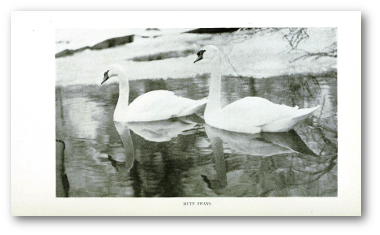
The lake is a proper lake, the water scummy and green-tinged, revealing slabs of mottled stone and tangles of weed like rotting hair. It’s home to extended families of ducks and coots, but its unquestioned rulers are a pair of self-absorbed swans. The female squats in a nest as wide as a small shed on the far bank, while her partner stands guard nearby. The place has a gravity that draws me, although it’s out of my way. I like these birds, their haughtiness a grand ‘fuck you’ to passers-by.
Five days in, my father calls me. I’m just passing the lake, a time out on my way to work, and he’s been crying, I can tell. He’s trying to hide it, but only a little. I have no idea what to say and the anguish in his voice brings back an ache I can barely stand. In desperation, I mention the park, the lake, the swans.
“They mate for life, don’t they?”
I think he’s mixed up swans and dolphins, but I can’t bring myself to argue.
“Well, you keep an eye out for them.”
“Sure,” I say. “And you look after yourself.”
“Why not? No one else to do it.”
——
August.
I have a little money but my flat is drab and empty, and the work is cutting smooth slices from my sanity. I listen to old records, watch old movies, and huddle in the park on a bench dedicated to some long-dead stranger, watching the swan family, which has grown by two chubby cygnets. I’d hoped the grief would have faded by now, but it’s knotted in my stomach like a tumour.
When my father calls, I talk about inconsequential things. The swans seem a reliable option. “She’s given birth. Two of them.”
“I hope she knows what she’s got herself into.”
I want to hang up. Instead, I say, “I’m sure they’ll get by.”
——
December.
The year bleeds out, unseasonably cold. For a week, the lake is frozen nearly to its centre, thick enough that it holds under my tentative foot. The swans decamp, the ducks and moorhens too. Without them, the park is like a mortuary, black trees lining black walkways. Then, one day–a Friday–the ice begins to thaw. By Monday, only a few glassy chunks remain, and the swans have come home. I only fully realise then how much I’ve been relying on their presence.
When my father calls, I expect him to mention the holidays. I’ve been planning the conversation. I have my excuse ready.
He doesn’t ask, and I don’t volunteer.
Afterwards, my heart feels like concrete weighing in my chest.
——
January.
I’ve passed my first Christmas alone, my first New Year’s too. I feel sad and enervated, drugged with the vague promise of a new year. I’ve done a lot of thinking, a fair amount of drinking, and deep down I sense that I’m changing. Maybe I’m getting a little perspective, or something like it.
Then, one day, the swans are gone–no ice this time to explain their absence. The next day there are only three. The day after, still just three. I’m dizzy with panic as I ride by, sick with a sense of wrongness. I get nothing done at work.
On my way home, I recognise two old people on the bench, hurling shrapnel of bread crusts towards the diminished family. They look at me distrustfully when I pull up.
“Do you know what happened to the other one?” I ask. I know instinctively which of the four swans is missing. I could never tell them apart before, yet there’s something overwhelmingly female about the creature hovering in front of us, mirrored in perfectly still water.
“Dog waded in, they got into a fight. Dog bit him. Then he got septicaemia. It was the septicaemia that killed him.”
“I’m sorry.” I’m not talking to them, or even looking at them. Still, they nod.
My father rings that night, of course. And of course, I tell him. One small death becomes another part of the static between us.
“What happened to the dog?”
“He didn’t say.”
My father sighs profoundly. “I hope it killed that damn mutt.”
——
March.
The two offspring are almost grown, only distinguishable from their mother by a few straggling grey feathers. It occurs to me, finally, that swans are nothing like people. Soon the children will be identical to their mother, a family of one. Do cygnets stay with their parents? I doubt it. They’ll fly away, and it will all happen again, or some variation on this theme–for nature is the great recycler.
He calls on a bad day, at a bad time. “Dad, I’m a little busy.”
“Of course. Better things to do that talk to a lonely old man.”
“You know what? Screw you. You’re not the only one who lost her.”
A pause. A silence. Then, “How dare you…”
I press a button, and my father is gone.
——
May.
She floats alone, her husband lost, her children gone, a little like a ghost. She turns to follow me whenever I ride by. I try not to read anything into her alien existence. Perhaps she’s grown used to human food by now, or even just to human presence.
“And she tied a bunch of violets with a tress of her pretty brown hair.”
She sat in the yellow glow of the lamplight softly humming these words. It was Easter evening, and the newly risen spring world was slowly sinking to a gentle, rosy, opalescent slumber, sweetly tired of the joy which had pervaded it all day. For in the dawn of the perfect morn, it had arisen, stretched out its arms in glorious happiness to greet the Saviour and said its hallelujahs, merrily trilling out carols of bird, and organ and flower-song. But the evening had come, and rest.
There was a letter lying on the table, it read:
“Dear, I send you this little bunch of flowers as my Easter token. Perhaps you may not be able to read their meanings, so I’ll tell you. Violets, you know, are my favorite flowers. Dear, little, human-faced things! They seem always as if about to whisper a love-word; and then they signify that thought which passes always between you and me. The orange blossoms — you know their meaning; the little pinks are the flowers you love; the evergreen leaf is the symbol of the endurance of our affection; the tube-roses I put in, because once when you kissed and pressed me close in your arms, I had a bunch of tube-roses on my bosom, and the heavy fragrance of their crushed loveliness has always lived in my memory. The violets and pinks are from a bunch I wore to-day, and when kneeling at the altar, during communion, did I sin, dear, when I thought of you? The tube-roses and orange-blossoms I wore Friday night; you always wished for a lock of my hair, so I’ll tie these flowers with them — but there, it is not stable enough; let me wrap them with a bit of ribbon, pale blue, from that little dress I wore last winter to the dance, when we had such a long, sweet talk in that forgotten nook. You always loved that dress, it fell in such soft ruffles away from the throat and blossoms, — you called me your little forget-me-not, that night. I laid the flowers away for awhile in our favorite book, — Byron — just at the poem we loved best, and now I send them to you. Keep them always in remembrance of me, and if ought should occur to separate us, press these flowers to your lips, and I will be with you in spirit, permeating your heart with unutterable love and happiness.”
II.
It is Easter again. As of old, the joyous bells clang out the glad news of the resurrection. The giddy, dancing sunbeams laugh riotously in field and street; birds carol their sweet twitterings everywhere, and the heavy perfume of flowers scents the golden atmosphere with inspiring fragrance. One long, golden sunbeam steals silently into the white-curtained window of a quiet room, and lay athwart a sleeping face. Cold, pale, still, its fair, young face pressed against the stain-lined casket. Slender, white fingers, idle now, they that had never known rest; locked softly over a bunch of violets; violets and tube-roses in her soft, brown hair, violets in the bosom of her long, white gown; violets and tube-roses and orange-blossoms banked everywhere, until the air was filled with the ascending souls of the human flowers. Some whispered that a broken heart had ceased to flutter in that still, young form, and that it was a mercy for the soul to ascend on the slender sunbeam. To-day she kneels at the throne of heaven, where one year ago she had communed at an earthly altar.
III.
Far away in a distant city, a man, carelessly looking among some papers, turned over a faded bunch of flowers tied with a blue ribbon and a lock of hair. He paused meditatively awhile, then turning to the regal-looking woman lounging before the fire, he asked:
“Wife, did you ever send me these?”
She raised her great, black eyes to his with a gesture of ineffable disdain, and replied languidly:
“You know very well I can’t bear flowers. How could I ever send such sentimental trash to anyone? Throw them into the fire.”
And the Easter bells chimed a solemn requiem as the flames slowly licked up the faded violets. Was it merely fancy on the wife’s part, or did the husband really sigh, — a long, quivering breath of remembrance?
Join the Community
Support
Support lorem ipsum dolor sit amet consectetur. At dignissim neque amet proin sodales vulputate dolor elit ipsum dolor sit amet.
Submissions lorem ipsum dolor sit amet consectetur. At dignissim neque amet proin sodales vulputate dolor elit. At dignissim neque amet proin sodales vulputate dolor elit.